
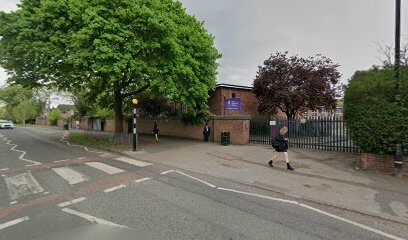
Catchment or distance priorityCo-educationalTrafford
Sale Grammar School catchment area
Sale · co-educational grammar school · ages 11 to 18
Admissions
Catchment or
distance priority
distance priority
Intake
Co-educational · ages 11 to 18
11+ test
Trafford Consortium (CEM-style/GL)
Year 7 places
190
Location
Marsland Rd, Sale M33 3NH
Website
Catchment, explained
How catchment works at Sale Grammar School
Qualify on the test (334+), then ranked: looked-after, up to 15 pupil-premium, priority-area applicants, then all others by straight-line distance.
Check whether the school uses a named priority area, home-to-school distance, or other priority groups. The map is a starting point, not an admissions decision.
Grammar schools near Sale
Trafford
Nearby options
Other grammar schools near Sale
Stretford Grammar School
Stretford · Area or distance priority
2.0 miles away
Loreto Grammar School
Altrincham · Area or distance priority
2.6 miles away
Urmston Grammar
Urmston · Score + location
2.9 miles away
Altrincham Grammar School for Girls
Altrincham · Area or distance priority
3.1 miles away
Altrincham Grammar School for Boys
Altrincham · Area or distance priority
3.2 miles away
St Ambrose College
Hale Barns · Area or distance priority
3.7 miles away
Applying
Sitting the 11+ for Sale Grammar School
1
Read the rules
Check Sale Grammar School's admissions information for the current priority categories, address rules and entry year.
2
Register for the test
Find the current Trafford Consortium (CEM-style/GL) instructions and deadline from the school, consortium or local authority. Registration routes can differ.
3
Apply for a place
Submit your secondary school preferences by your local authority's deadline. A qualifying test result makes your child eligible; it is not an offer.
FAQs
Get Pip free →
Sale Grammar School catchment, your questions answered
Does Sale Grammar School have a catchment area?+
Yes. After passing, a priority admission area (M33 and Trafford M23/WA14/WA15) is favoured, then places go by distance.
How are places allocated at Sale Grammar School?+
Qualify on the test (334+), then ranked: looked-after, up to 15 pupil-premium, priority-area applicants, then all others by straight-line distance. Check the school's current admissions information before applying.
What test does my child need to take?+
Sale Grammar School lists Trafford Consortium (CEM-style/GL) as its entrance test. Check its current registration instructions and dates before making plans.
How many Year 7 places does Sale Grammar School offer?+
The published admission number in our source data is 190. Confirm the number for your child's entry year in the school's current policy.
Does passing the entrance test guarantee a place?+
No. Meeting the qualifying standard makes a child eligible for consideration. Offers then follow the school's published priority and oversubscription rules.
Practise the subjects this test uses
Pip offers short maths, English and reasoning practice. Check Sale Grammar School's current test subjects before choosing what to work on.
Admissions details can change each year. Check Sale Grammar School's published information and your local authority's current arrangements before applying. The map shows nearby schools; it does not predict an offer.