London holds a remarkable concentration of the best schools in the country, and several of its independent schools rank among the very best private schools in the UK nationally. Below are our ten best private schools in London, ranked on a blend of 2025 results, academic reputation and how selective they are. For each one you will find what actually helps you plan: who it is for, the entrance exam it sets, when children join, and why it earns its place. These are fee-paying schools, though most offer bursaries and scholarships, and the "best" school is always the one that fits your child.
- Our ten London independents blend top 2025 results with reputation; St Paul's School leads the country.
- These are fee-paying day schools, most with bursaries and scholarships, entered by exam at 11+ or 13+.
- Several belong to the London 11+ Consortium (a shared computer-based assessment); others set their own English and maths papers, and 13+ schools use the ISEB Common Pre-Test.
- They are hugely oversubscribed, so prepare early across the skills each tests, and apply to several.
How we ranked them
There is no single official ranking of independent schools, so we used a transparent blend of three things: the most recent published exam results (2025 A-level grades at A*/A, alongside GCSE strength), academic reputation including university destinations, and selectivity. We also weighed consistency and standing over time. A London-specific note: many of the city's day schools belong to the London 11+ Consortium and share a first-stage computer-based assessment, which is worth understanding before you apply.
Two honest caveats. First, every school here is exceptional, so the order separates outstanding from outstanding, and any would be a superb choice. Second, independent schools are inspected by the ISI rather than Ofsted, and results, fees and admissions change every year, so treat the detail as a 2025/2026 snapshot and always confirm the latest on each school's own website. Pip is not affiliated with any school or exam board.
1St Paul's School
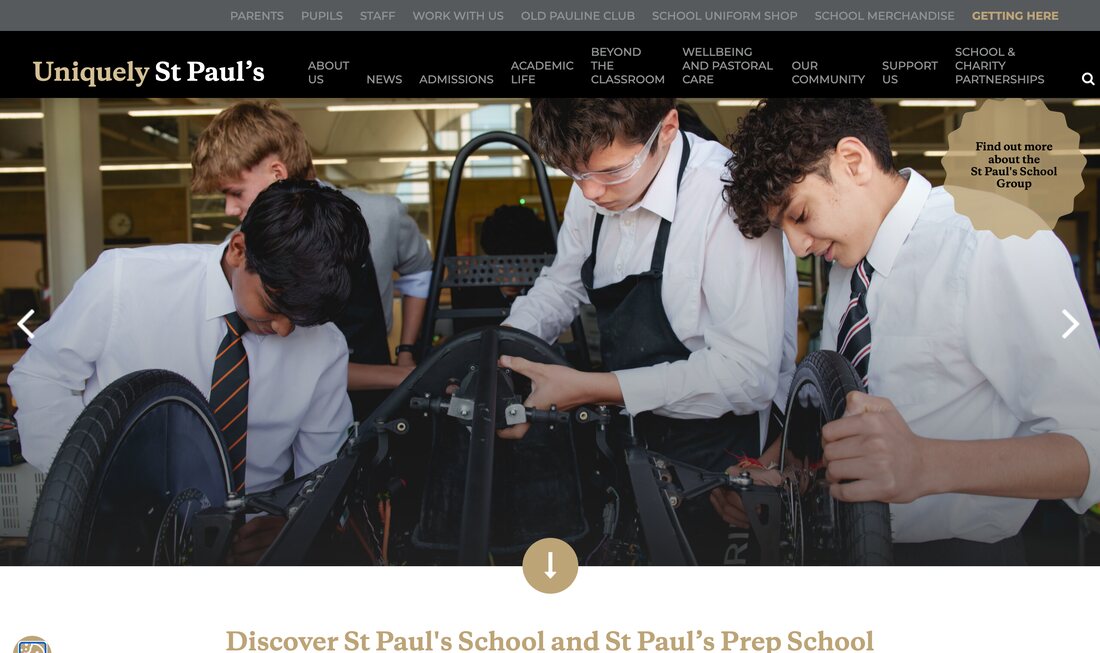
- Who it's forBoys' school, mainly day · Barnes, south-west London (SW13)
- Entrance examISEB Common Pre-Test then the school's own assessment and interview; 11+ entry to St Paul's Juniors
- Entry points7+, 11+, 13+ and 16+
- ResultsAround 92% of A-levels at A*/A in 2025, the top school in London and England
Founded in 1509, St Paul's is the highest-achieving school in London and the country, topping the independent boys' schools on A-level results in 2025. Most boys join at 13+ through the ISEB Common Pre-Test in Year 6, followed by the school's own assessment and interview. It pairs formidable academics with a famous tradition in music and debating.
2St Paul's Girls' School
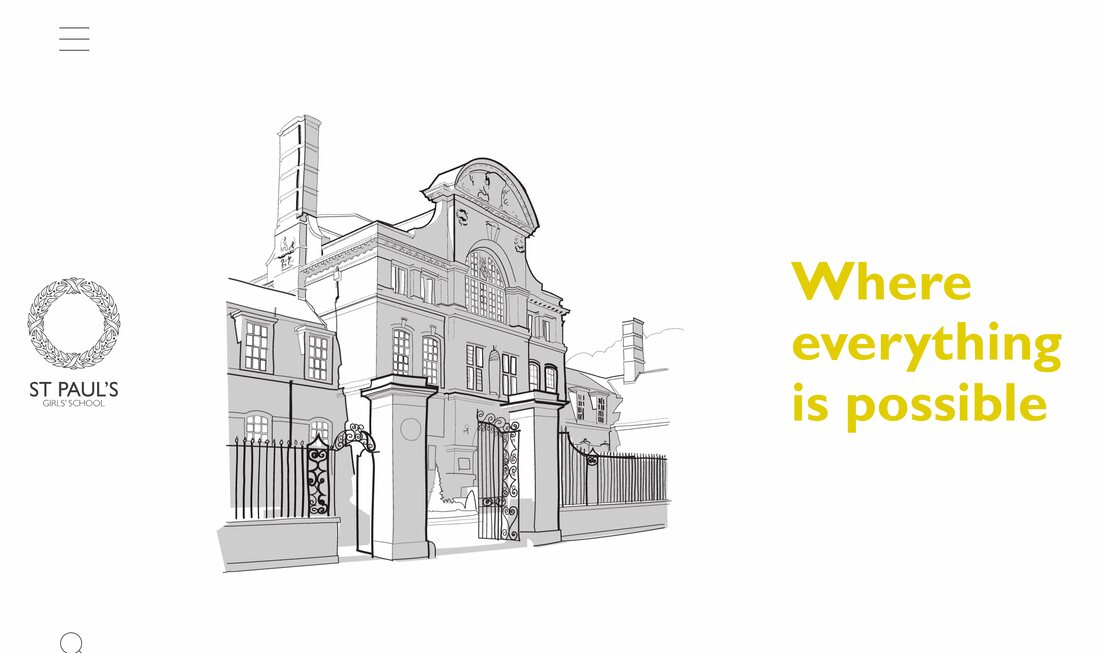
- Who it's forGirls' school, day · Hammersmith, west London (W6)
- Entrance examThe school's own written assessments in English, maths and comprehension, then an interview
- Entry points11+ and 16+
- ResultsAround 89% of A-levels at A*/A in 2025, the leading girls' school nationally
Just across the borough from its brother foundation, St Paul's Girls' is consistently the top-performing girls' school in the country. The main entry is at 11+, through the school's own fast-paced written papers in English, maths and comprehension, followed by an interview. It has an exceptional musical heritage and a culture that prizes intellectual curiosity over exam drilling.
3Westminster School
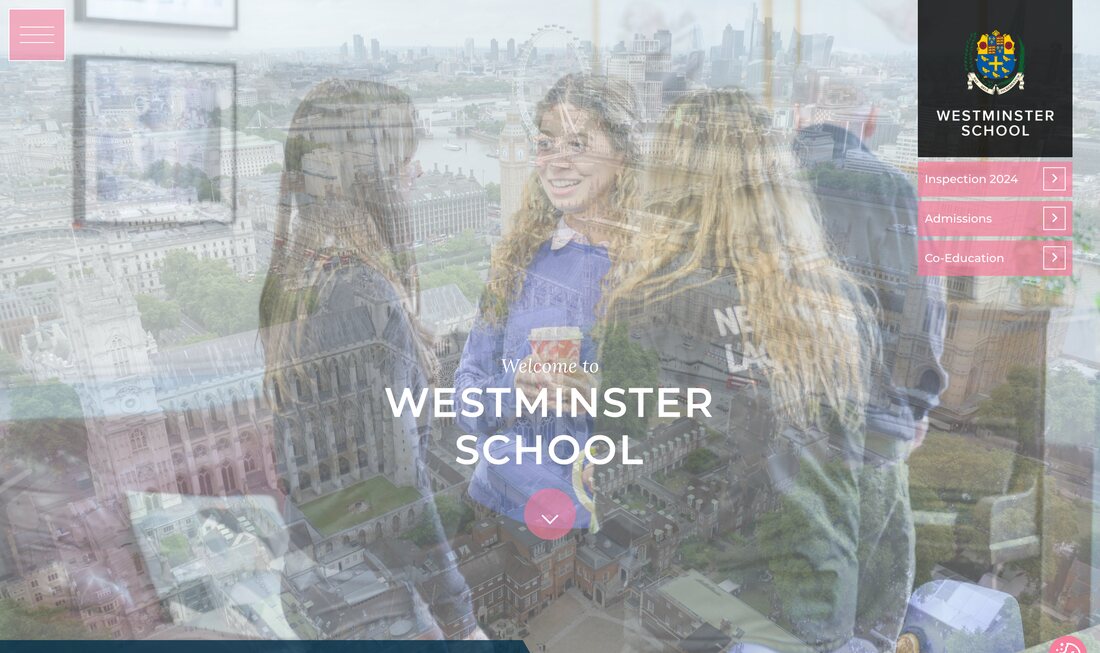
- Who it's forBoys' school with a co-educational sixth form, day and some boarding · Westminster (SW1)
- Entrance examISEB Common Pre-Test plus the school's own papers and interview; co-ed entry at 16+
- Entry points7+ and 11+ (Under School), 13+ and 16+
- ResultsAround 88% of A-levels at A*/A in 2025, with one of the strongest Oxbridge records anywhere
Beside Westminster Abbey in the heart of the city, Westminster is an academic powerhouse with one of the most enviable university pipelines in the country. Boys typically join the senior school at 13+ via the ISEB Common Pre-Test and the school's own assessments, and the sixth form becomes co-educational.
4King's College School, Wimbledon
- Who it's forCo-educational, day · Wimbledon, south-west London (SW19)
- Entrance exam11+ entrance exam in December of Year 6 in English, maths and non-verbal reasoning, then an interview; 13+ entry uses the ISEB Common Pre-Test
- Entry points11+, 13+ and 16+
- ResultsAround 86% of A-levels at A*/A in 2025, among the top co-educational schools nationally
King's College School, known as KCS, is one of the leading co-educational day schools in the country and now fully co-educational throughout. Its 11+ entry, sat in December of Year 6, tests English, maths and non-verbal reasoning before an interview. KCS blends elite academics with a notably broad and grounded culture.
5North London Collegiate School

- Who it's forGirls' school, day · Edgware, north-west London (HA8)
- Entrance examThe school's own entrance examinations in English and maths, followed by an interview
- Entry points4+, 7+, 11+ and 16+
- ResultsAround 86% of A-levels at A*/A in 2025, one of the leading girls' schools in the country
North London Collegiate has been a pioneer of academic education for girls since 1850 and remains one of the very best girls' schools in the country. The main entry is at 11+, through the school's own English and maths papers and an interview, and it is known for stretching able girls hard while sending them to the most competitive universities worldwide.
6Highgate School

- Who it's forCo-educational, day · Highgate, north London (N6)
- Entrance examA member of the London 11+ Consortium: a shared computer-based assessment, then the school's own stages and an interview
- Entry points11+, 13+ and 16+
- ResultsAround 80% of A-levels at A*/A in 2025, a leading north London co-educational school
Highgate is one of north London's strongest co-educational schools, combining excellent results with a relaxed, creative culture and a beautiful village setting. It is a member of the London 11+ Consortium, so the first stage of entry is a shared computer-based assessment, after which the school runs its own later stages and interview.
7City of London School
- Who it's forBoys' school, day · City of London, by the Thames (EC4)
- Entrance exam11+ entrance assessment in English and maths and an interview; 13+ entry uses the ISEB Common Pre-Test
- Entry points10+, 11+, 13+ and 16+
- ResultsConsistently strong results and a leading City day school for boys
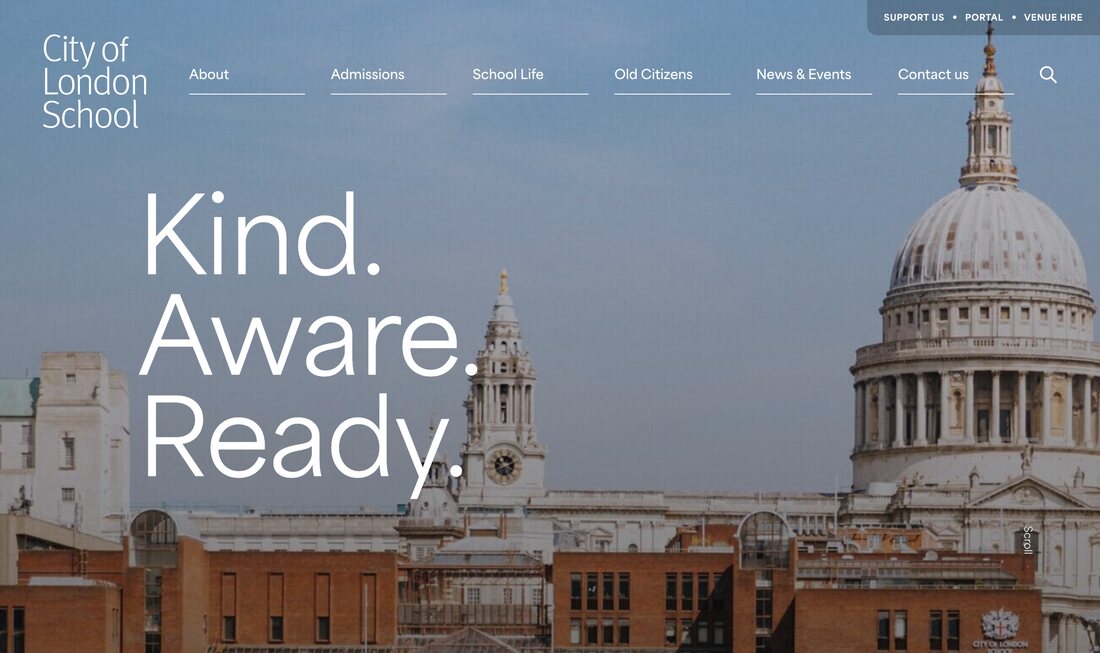
City of London School sits on the banks of the Thames between St Paul's Cathedral and the Tate Modern, drawing boys from across the capital on its excellent transport links. Entry at 11+ is by the school's own English and maths assessment and an interview, while 13+ entrants use the ISEB Common Pre-Test. It has a notably diverse, city-minded intake.
8Dulwich College
- Who it's forBoys' school, day and some boarding · Dulwich, south London (SE21)
- Entrance examThe school's own 11+ entrance examination in English and maths, followed by an interview
- Entry points7+, 11+, 13+ and 16+
- ResultsStrong results across the board and the leading boys' school in south London
Set in 70 acres of south London, Dulwich College combines a historic campus with excellent academics, sport and music. The main 11+ entry is by the school's own English and maths papers and an interview. Its size and facilities give it an unusually broad range of opportunities, and it runs a substantial bursary scheme in keeping with its founding mission.
9Godolphin and Latymer School
- Who it's forGirls' school, day · Hammersmith, west London (W6)
- Entrance examA member of the London 11+ Consortium: a shared computer-based assessment, then the school's own stage and an interview
- Entry points11+ and 16+
- ResultsAround 97% of A-levels at A* to B in 2025, one of the top girls' day schools in London
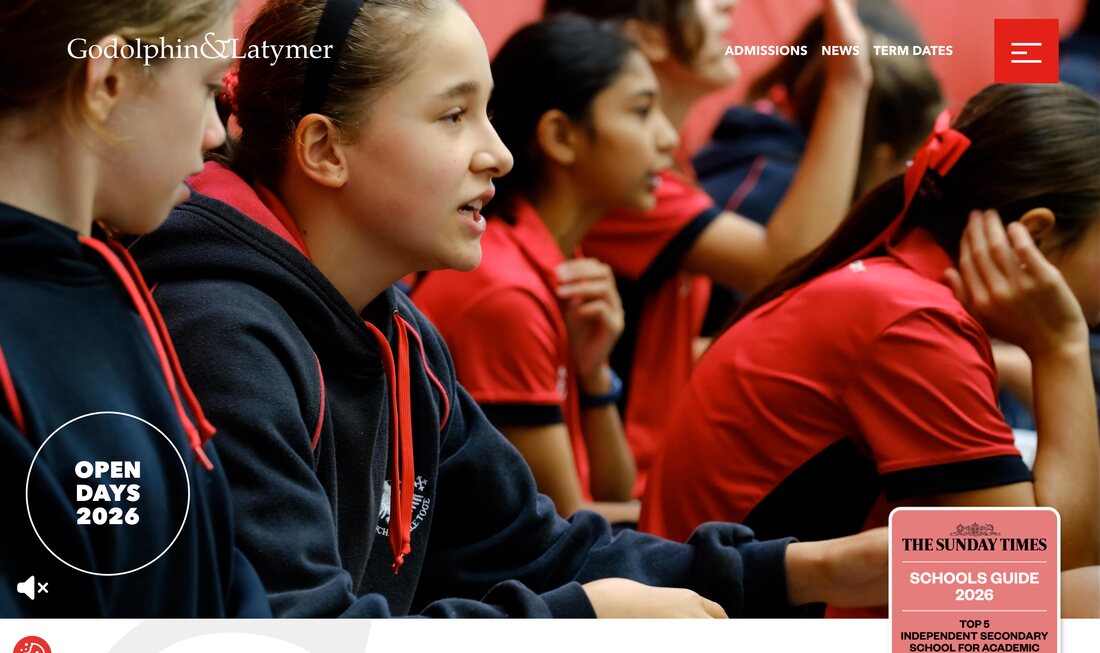
Godolphin and Latymer is one of west London's leading girls' day schools, known for high academic standards alongside a warm, well-rounded culture. As a member of the London 11+ Consortium, the first stage of entry is a shared computer-based assessment, followed by the school's own stage and an interview. It is a popular choice for families wanting top results without boarding.
10Latymer Upper School
- Who it's forCo-educational, day · Hammersmith, west London (W6)
- Entrance examA member of the London 11+ Consortium: a shared computer-based assessment, then the school's own stage and an interview
- Entry points11+, 13+ and 16+
- ResultsAround 81% of A-levels at A*/A in 2025, a leading co-educational day school
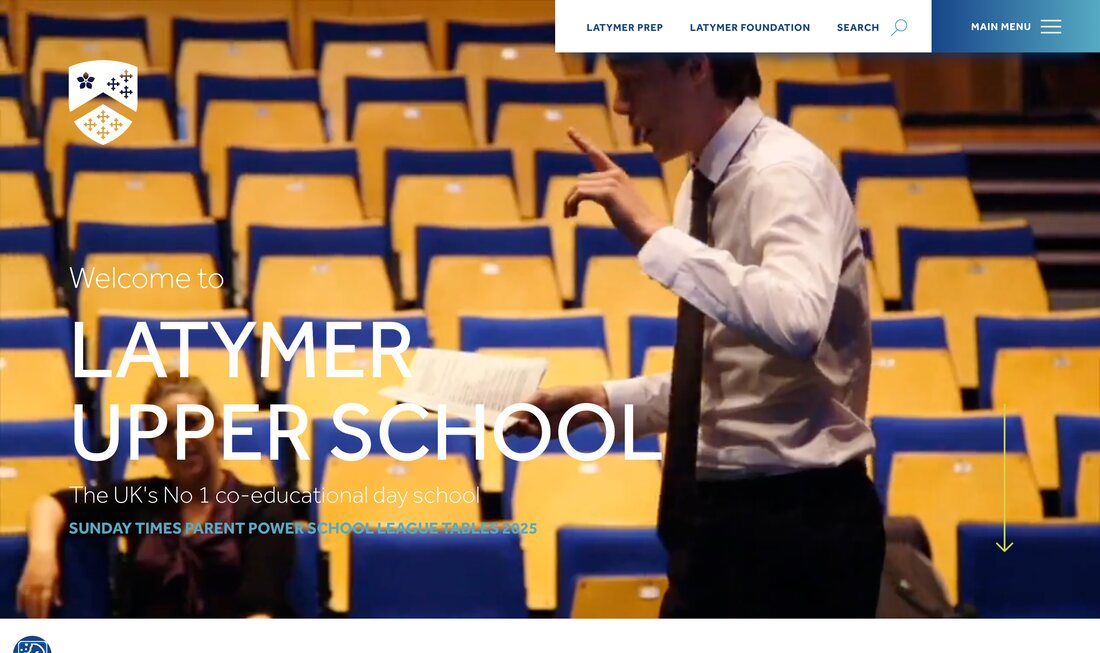
On the Thames in Hammersmith, Latymer Upper is one of London's strongest co-educational day schools, with a reputation for outstanding drama and a genuinely broad intake supported by a large bursary programme. It uses the London 11+ Consortium's shared assessment as a first stage, followed by its own later stage and an interview.
What counts as a private school in London?
The labels confuse a lot of parents, so it is worth being precise. A private school and an independent school are the same thing: a school that charges fees and runs independently of the state, governed by its own board rather than the local authority. A public school is also private, despite the name; the term refers historically to a small group of long-established independent schools, not to state schools. A state school is the free, government-funded alternative, which includes London's grammar schools.
So when people search for the best private schools in London, they almost always mean the city's leading fee-charging independent day schools, which is exactly what this guide ranks.
Best private schools in London by area
London's independent schools cluster in distinct pockets, and the right shortlist often comes down to a sensible commute. Here is how the leading schools on our list map across the capital.
Central London
The historic heart of independent education. Westminster School, beside the Abbey, and City of London School, on the river by the City, are the academic anchors, set among the dense private-school boroughs of Westminster and Kensington and Chelsea.
West London
The strongest single cluster of academic day schools. St Paul's School in Barnes, St Paul's Girls' and Godolphin and Latymer in Hammersmith, and Latymer Upper on the Thames make west London the first stop for many families.
South London
Strong day schools with greener sites. Dulwich College in its large south London grounds and King's College School, Wimbledon lead here, popular with families across the south-western suburbs.
North London
A cluster around Highgate, Hampstead and Edgware. Highgate School and North London Collegiate are the standouts, drawing from north London and Hertfordshire.
East London
The thinnest pocket for traditional independents, though the City fringe and east London have a growing number of schools. Families east of the centre often look to the City and north London clusters, or to independent and grammar schools in Essex just outside the capital.
Best private girls' schools in London
London has some of the most academic girls' day schools in the country. On our list, St Paul's Girls' School and North London Collegiate sit among the very top nationally, with Godolphin and Latymer a leading west London choice. The Girls' Day School Trust also runs a number of respected girls' schools across the capital. Single-sex girls' schools appeal to families who want a focused environment through the senior years.
Best private boys' schools in London
The historic boys' day schools remain among the strongest performers in the country. St Paul's School, City of London School and Dulwich College lead our list, while Westminster is largely boys with a co-educational sixth form. Several admit girls at 16+, so it is worth checking each school's policy if you are looking at sixth-form entry.
Co-educational private schools in London
Co-education is increasingly the norm, and several of London's strongest schools teach boys and girls together. King's College School, Wimbledon, Highgate School and Latymer Upper are leading co-ed day schools on our list. Once you adjust for how selective each school is, there is little measurable academic difference between single-sex and co-ed, so this is really a question of which environment suits your child.
Private school fees in London and the 20% VAT
Fees are the deciding factor for many families. Day fees at leading London independents commonly run from around 18,000 to over 25,000 pounds a year, and the few that board cost considerably more. The big recent change is tax: from January 2025, private school fees in the UK carry 20 percent VAT, which pushed headline fees up across the board.
Always check each school's current fee schedule, and look at what is included, since extras such as lunches, trips and music lessons add up. Fees rise most years, so treat any figure as a starting point and confirm it on the school's own admissions page.
Bursaries and scholarships
Help with fees is more widely available than many families realise, and the two main forms are different. A scholarship recognises talent, in academics, music, sport, art or drama, and today the cash value is often modest. A bursary is means-tested on household income and assets, and this is where the real support lies: at many London schools a bursary can cover a large share of the fees, and some reach up to 100 percent for families who need it.
If fees look out of reach, ask anyway. Apply to the school's bursar early, often about a year ahead, because funds are limited and allocated in advance.
How to get in: 7+, 11+, 13+ and the entrance tests
London admissions reward early planning. The main entry points are 4+, 7+, 11+, 13+ and 16+, with 11+ the most competitive single gateway into the senior schools. The assessment varies: many academically selective day schools belong to the London 11+ Consortium and share a computer-based first-stage test, while other schools, especially at 13+, use the ISEB Common Pre-Test. Almost all then add their own paper and an interview.
How to choose the right private school for your child
With so many strong schools, the decision usually comes down to fit rather than league-table position. Weigh up the daily commute, single-sex against co-ed, the academic pressure your child will thrive under, the entry point that suits their age, and whether a bursary brings the fees within reach. Visit on a normal working day if you can, and talk to current families.
It is also worth keeping options open. Many families prepare for both independent and grammar entry, and look just outside London too, at strong schools in Surrey and the wider best private schools in the UK. Whatever the route, steady 11+ practice in English, maths and reasoning is the foundation that travels with your child.
Across the ISEB Pre-Test, the London 11+ Consortium assessment and own-paper exams, it comes down to English, maths and reasoning. Pip builds all four with unlimited, exam-style questions and free downloadable papers, Maths, English, Verbal Reasoning and Non-Verbal Reasoning. It helps to understand how the ISEB Pre-Test works and how to choose which schools to apply to.
One free app for every school on this list
London's independents test some mix of English, maths and reasoning. Pip turns them into five calm minutes a day, adaptive, exam-style, and genuinely free.



Frequently asked questions
What is the best private school in London?+
By 2025 A-level results, St Paul's School in Barnes is the top private school in London and in England, with St Paul's Girls' School and Westminster School close behind. The best school for your family, though, depends on your child, location and fit, not just league-table position.
How do you get into a top London private school?+
Register early, often by Year 5, then sit the entrance assessment. Several London day schools belong to the London 11+ Consortium and use a shared computer-based assessment; others set their own English and maths papers, and 13+ schools use the ISEB Common Pre-Test. Most then add an interview. Confirm each school's process and deadlines on its admissions page.
What is the London 11+ Consortium?+
It is a group of leading London independent day schools that share a common first-stage assessment, a computer-based cognitive test, to reduce the number of separate exams a child sits. Members include schools such as Highgate, City of London School, Latymer Upper and Godolphin and Latymer. Each school then runs its own later stages and interview.
How much do London private schools cost?+
Day fees at leading London independents commonly run to tens of thousands of pounds a year, and vary by school. Most offer means-tested bursaries and academic or music scholarships, so it is always worth asking each school directly about financial support.
Are London private schools better than London grammar schools?+
They are different rather than simply better. London's grammar schools are free and state-funded but highly selective by exam; the top independents charge fees but offer smaller classes and extensive facilities. The right choice depends on your child, your budget and what is near you. See our top London grammar schools guide too.
What is the difference between a private school and an independent school?+
In the UK they mean the same thing: both are fee-charging schools run independently of the state. Confusingly, a public school is also private; the term refers to a small group of old independent schools, not to state schools.
How many private schools are there in London?+
London has the highest concentration of independent schools in the country, several hundred across the capital. Boroughs such as Kensington and Chelsea, Westminster and Camden have the greatest density.
What is the best private girls' school in London?+
St Paul's Girls' School and North London Collegiate are among the most academic girls' day schools in the country, with Godolphin and Latymer another leading west London choice. The best fit depends on location, atmosphere and your daughter's strengths.
How much are private school fees in London, and is there VAT?+
London day fees commonly run from around 18,000 to over 25,000 pounds a year, and since January 2025 private school fees carry 20 percent VAT. Always check each school's current fees, since they change every year.
How do I apply for a bursary at a London private school?+
Apply directly to the school, usually about a year ahead, and expect a means test of household income and assets. Bursaries can cover a large share of the fees, sometimes up to 100 percent, and are separate from talent-based scholarships.

The Pip team builds Pip, the 11+ and KS2 practice app for children in years three to six. We write these guides from real exam formats and past papers.