
WORDS WITH MEANINGS · FREE PDF
11+ vocabulary list with meanings
A cross-year reference for unfamiliar words, meanings in context and active recall. For a year-specific starting point, the Year 4, 5 and 6 lists are below.
Free 11+ papers.
Print, mark, repeat.
Free original 11+ practice papers and printables, with answers. Choose a subject or your exam format, download the PDF, then turn the gaps you spot into fresh practice in Pip.
Pick the format they will sit or focus on one subject. If you are unsure, start with an untimed subject paper and check the exam format with your school.
Showing all 14 collections. Every PDF is free and downloads once you enter your email.
These are original Pip practice materials, not official past papers. Formats, answer sheets and mark schemes vary by test, so check each collection before printing.
Thanks! Your download is on its way.
We'll only use your email to send this and, if you tick the box, our tips.
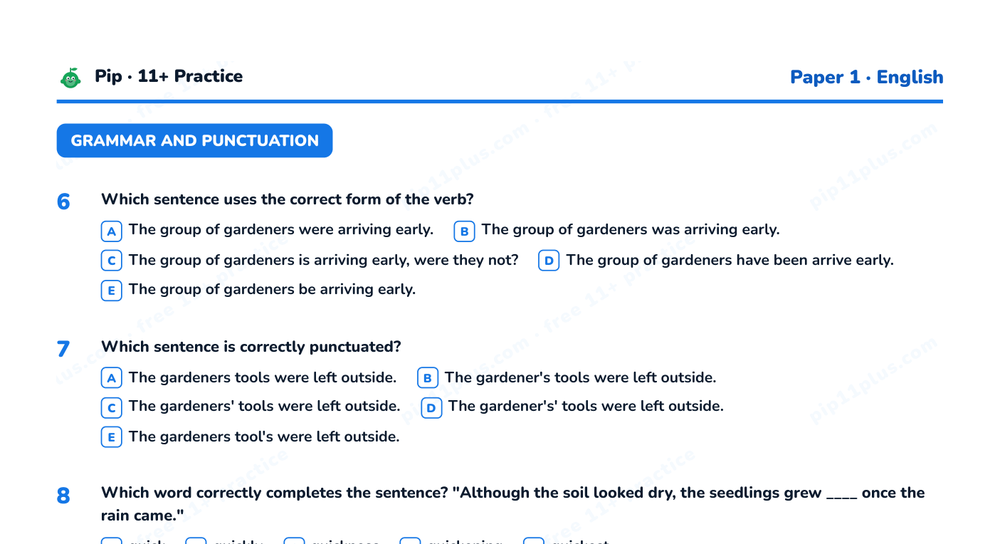 GL Assessment
PDF
GL Assessment
PDF
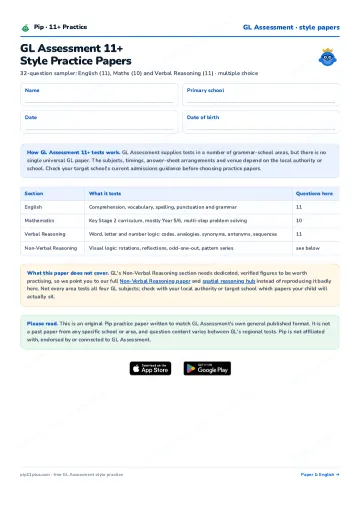
English, Maths and Verbal Reasoning, matching GL Assessment's own published test format used in Kent, Bucks, Birmingham and more.
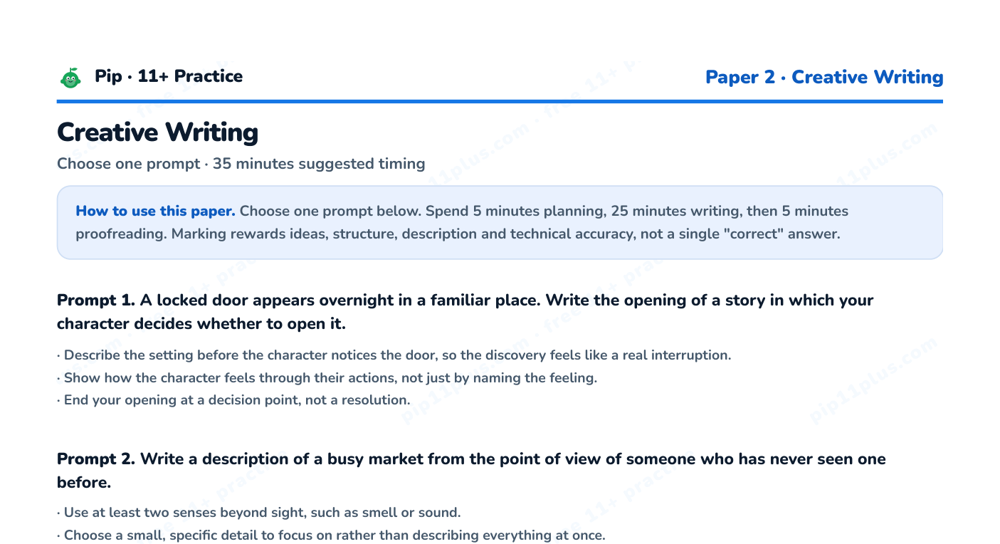 FSCE
PDF
FSCE
PDF
English, a dedicated Creative Writing paper and Maths to Year 5, matching FSCE's own published test framework. No verbal or non-verbal reasoning, by design.
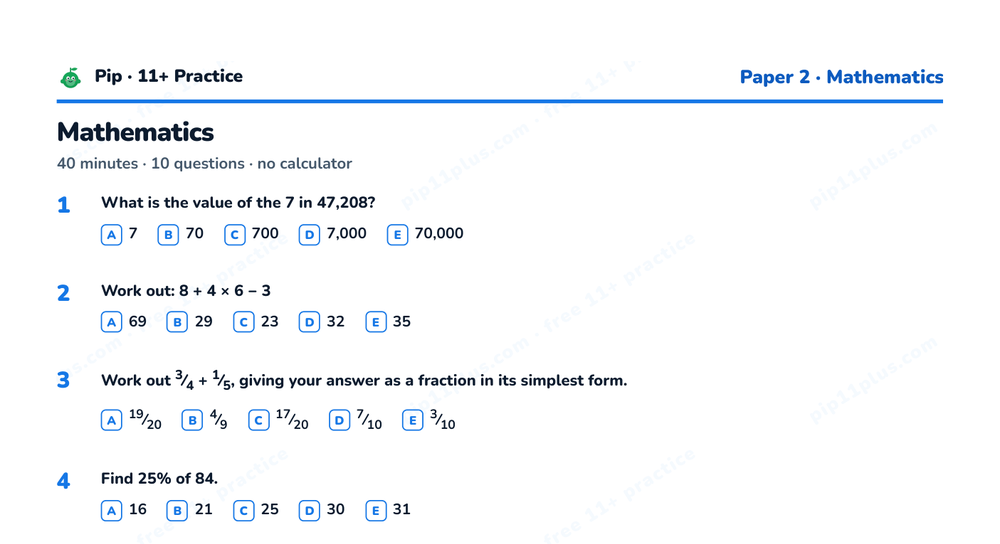 ISEB Pre-Test
PDF
ISEB Pre-Test
PDF
English, Maths and Verbal Reasoning matching ISEB's own published test framework for independent school entry, with full worked answers.
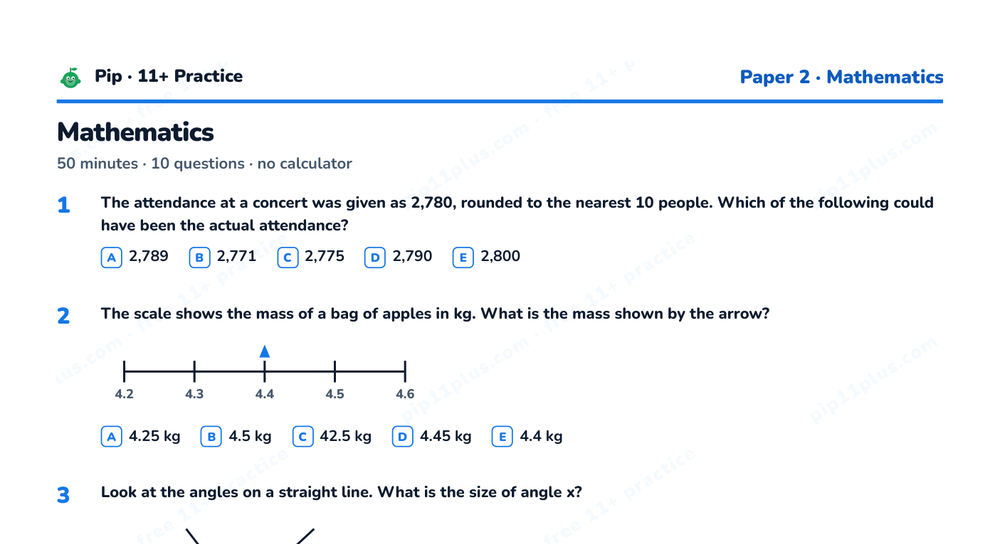 Medway Test
PDF
Medway Test
PDF
English, Maths and Verbal Reasoning matching Medway Council's own familiarisation booklet, including the choose-TWO comprehension and hidden-word question types.
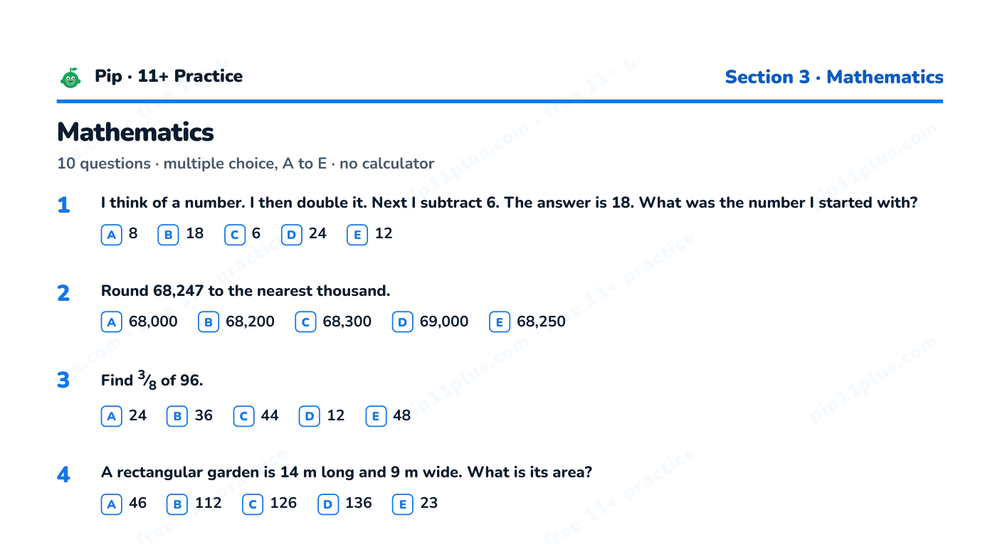 Kent Test
PDF
Kent Test
PDF
Verbal Reasoning, English and Maths matching Kent County Council's own familiarisation booklet, including the insert-letter and double-meaning question types.
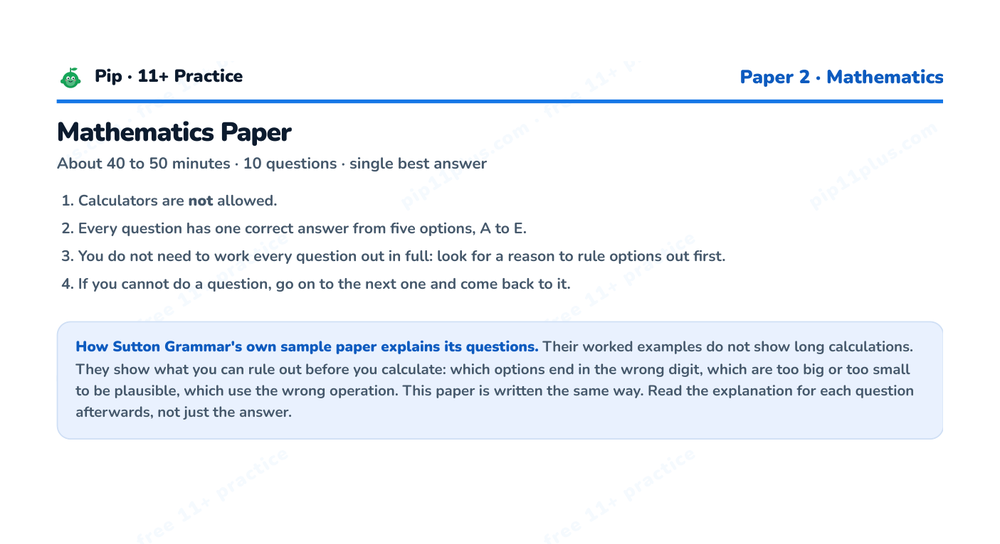 Sutton · SET
PDF
Sutton · SET
PDF
Maths and English in the real SET Stage One format: no verbal or non-verbal reasoning, plus "select two" and "select all correct" question types with a lozenge answer sheet.
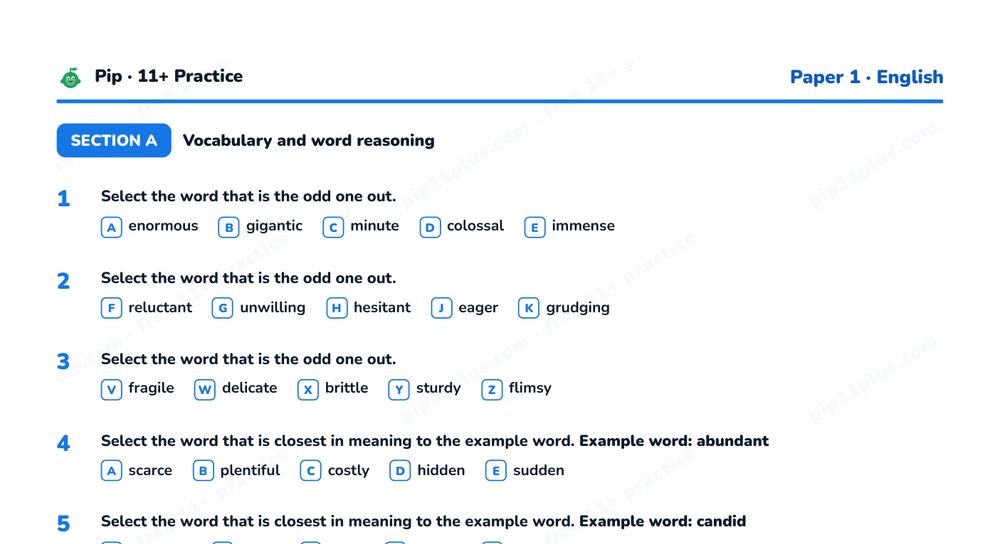 Kingston · Tiffin
PDF
Kingston · Tiffin
PDF
Maths and English in the real Tiffin Stage One format, including the rotating OMR answer letters and numeric column entry. Answer sheet and full mark schemes included.
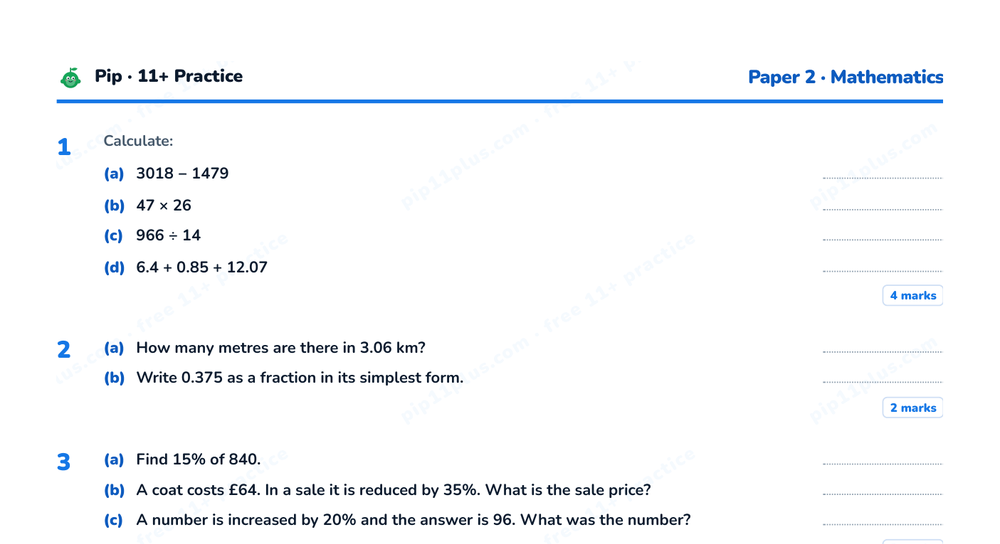 Essex · CSSE
PDF
Essex · CSSE
PDF
Original written English and Maths practice, with comprehension, continuous writing, worked answers and marking guidance. Built around the current two-subject CSSE scope.
 Buckinghamshire
PDF
Buckinghamshire
PDF
A full Secondary Transfer Test style paper, weighted like the real STTS: verbal skills for half the marks, with maths and non-verbal reasoning a quarter each. Answer sheet and worked answers included.
Two original, shorter booklets spanning the latest published Quest format, with a separate answer sheet and worked answers. Clearly not a full-length official test.
English
PDF
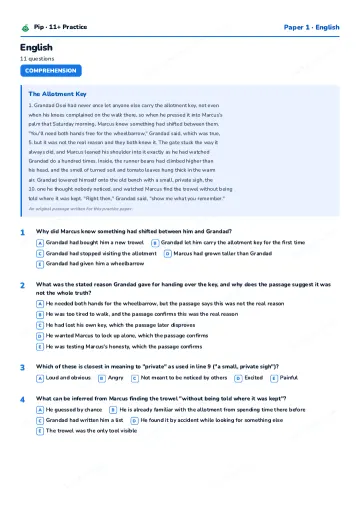
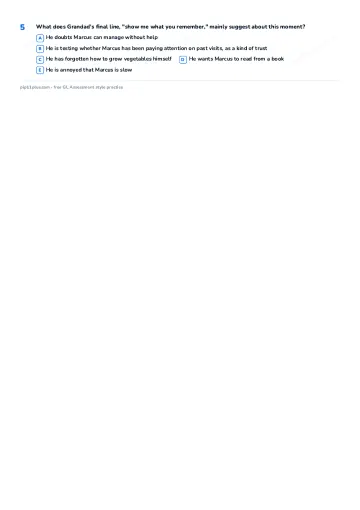
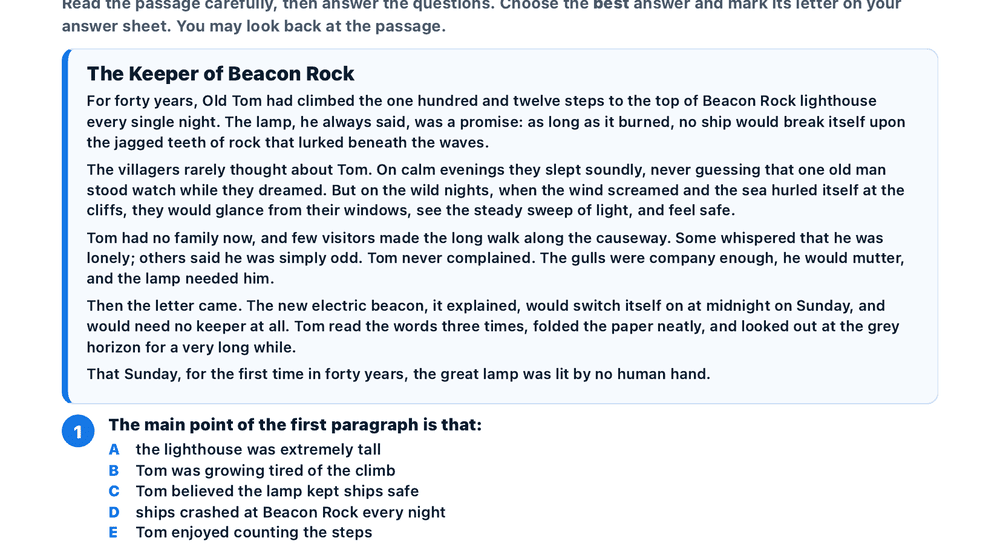
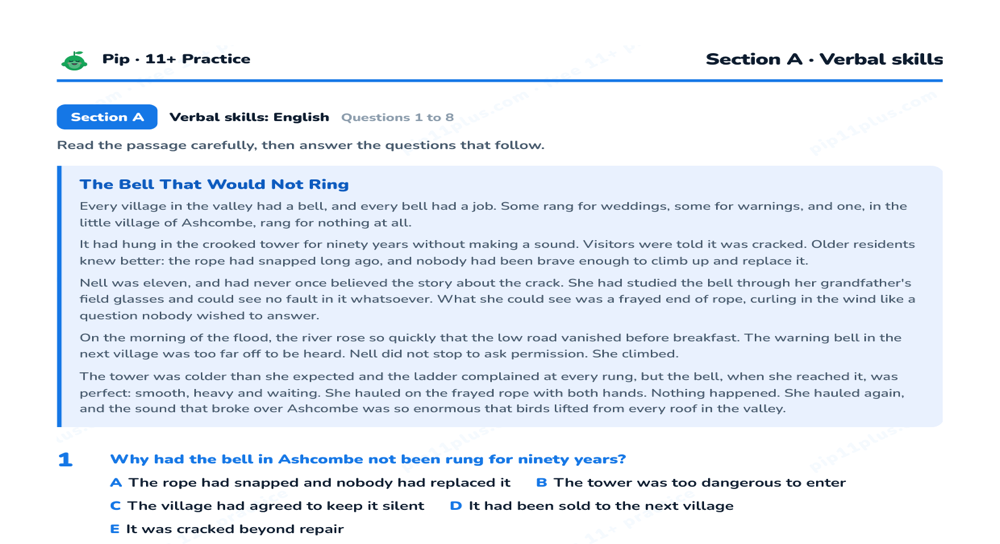
An English subject paper with reading comprehension, punctuation and sentence completion. Includes its response sheet and answers.
 Maths
PDF
Maths
PDF
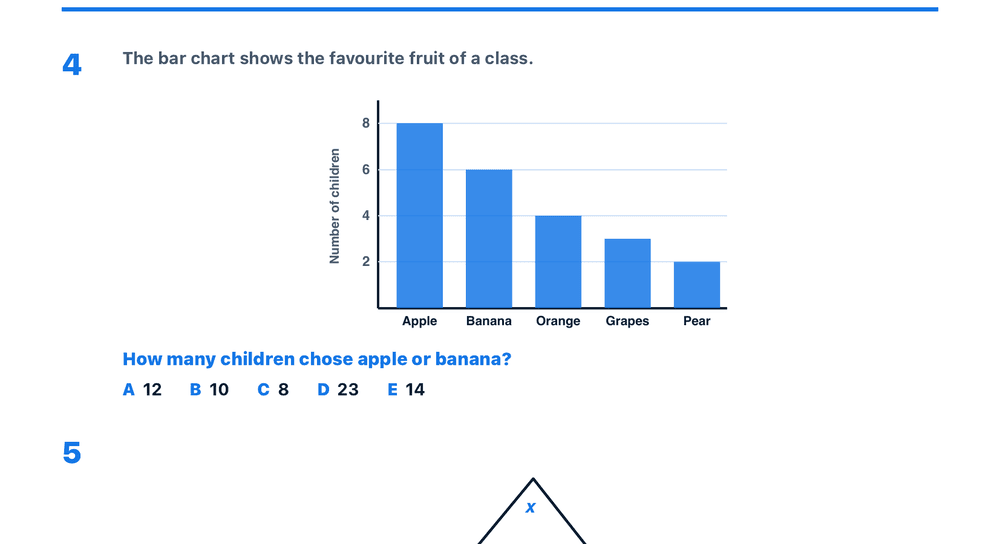
Two Maths papers spanning number, arithmetic, shape, data and reasoning, with figures, tables and worked answers.
 Verbal Reasoning
PDF
Verbal Reasoning
PDF
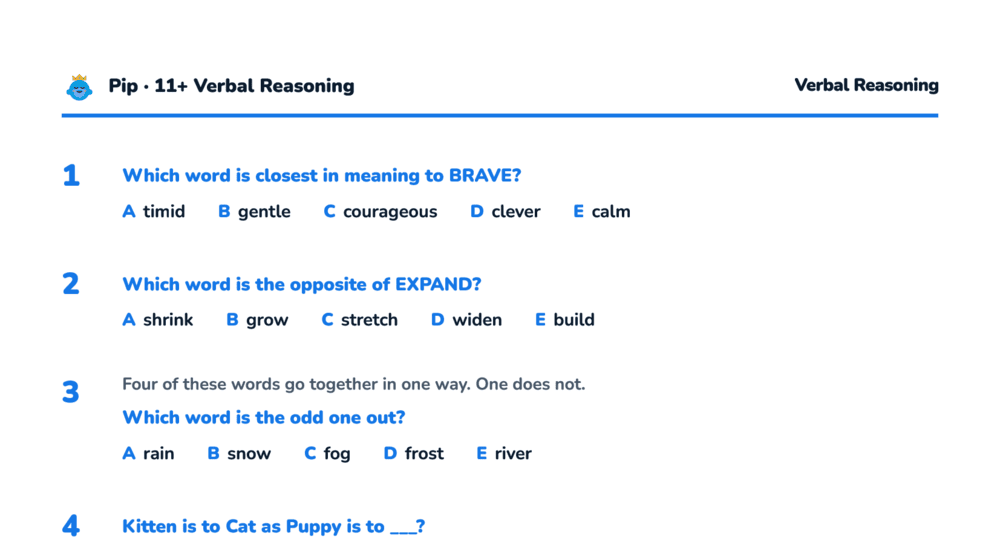
Verbal Reasoning practice covering synonyms, antonyms, sequences, codes and analogies, with answers to review.
 Non-Verbal Reasoning
PDF
Non-Verbal Reasoning
PDF
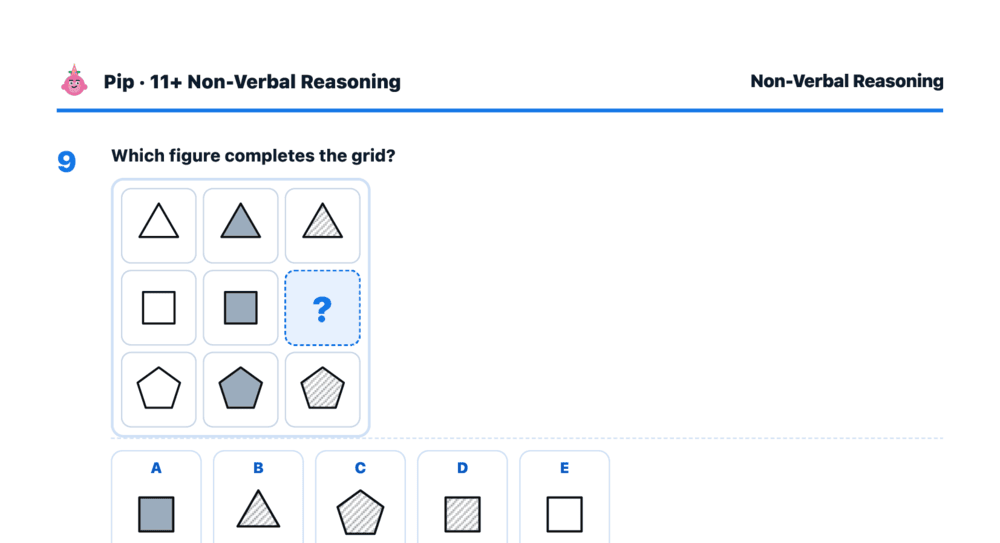
Visual reasoning practice with series, analogies, grids, codes, mirror images and split-box puzzles, with answers to review.
Not ready for another whole paper? Choose the topic your child hesitated on and print a focused worksheet with explanations, answers and a clear next step.
A cross-year reference for unfamiliar words, meanings in context and active recall. For a year-specific starting point, the Year 4, 5 and 6 lists are below.
Multiple-choice reading questions with worked answers that point back to the evidence in the passage, not just an answer letter.
Useful patterns and a way to test, correct and revisit words.
Draw, choose an operation and check that the answer makes sense.
Choose and explain the mark that makes the sentence work.
Fill the missing word using grammar, meaning and context.
Start with a prompt, build a scene and revise with a checklist.
When the page is full, learning does not stop. Pip gives your child fresh questions and feedback in the free app, so they can practise the skill again.
See Pip after the paper →A ten-page Pip guide with a real cut-and-fold activity, eight original cube-view questions and worked answers. Print at A4 without giving us your email.
A paper shows you where your child hesitated. Pip gives them fresh questions in Maths, English, Verbal and Non-Verbal Reasoning, with feedback after each answer and a level that adjusts as they practise.
Free practice is repeatable. Pip Pro adds interactive Pip Teaches lessons and timed mock papers.
See how Pip adapts the next question and skill


Here’s 247 between 240 and 250. Which tidy number is it nearer to?
Tap an answer to see how Pip guides the next step.
Based on Pip’s actual “Rounding” lesson. Interactive preview, not the app.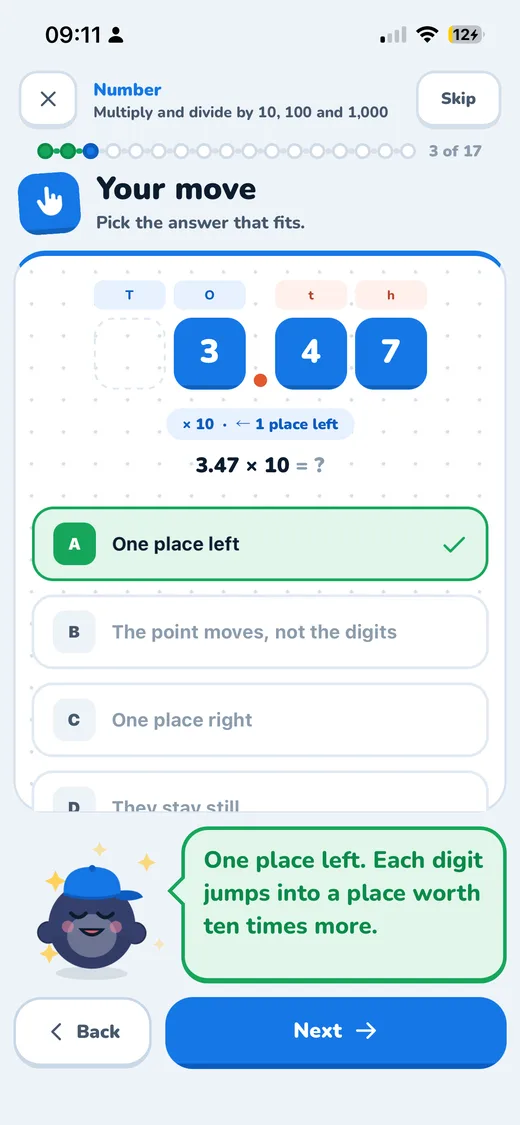
This is a real Pip feedback screen. The free app keeps giving your child fresh practice after the paper ends.
Alongside the papers, Pip offers free printable word lists for Years 4, 5 and 6, drawing on the statutory spelling lists and adding meanings, example sentences and pronunciation help. For active revision, try Pip's vocabulary tools with flashcards, matching and spelling practice.
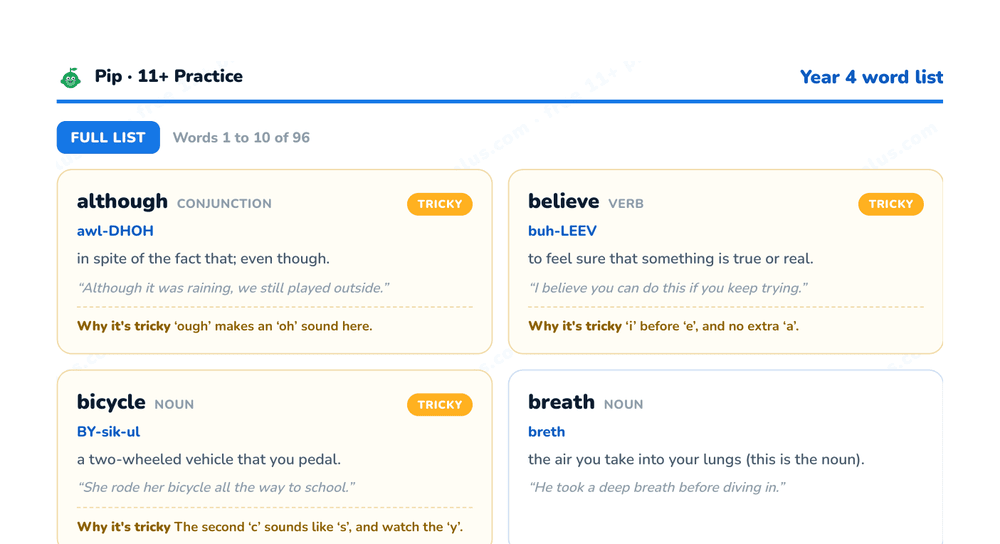 Year 4
PDF
Year 4
PDF
Year 3/4 statutory-list words, with meanings, examples and how to say each one.
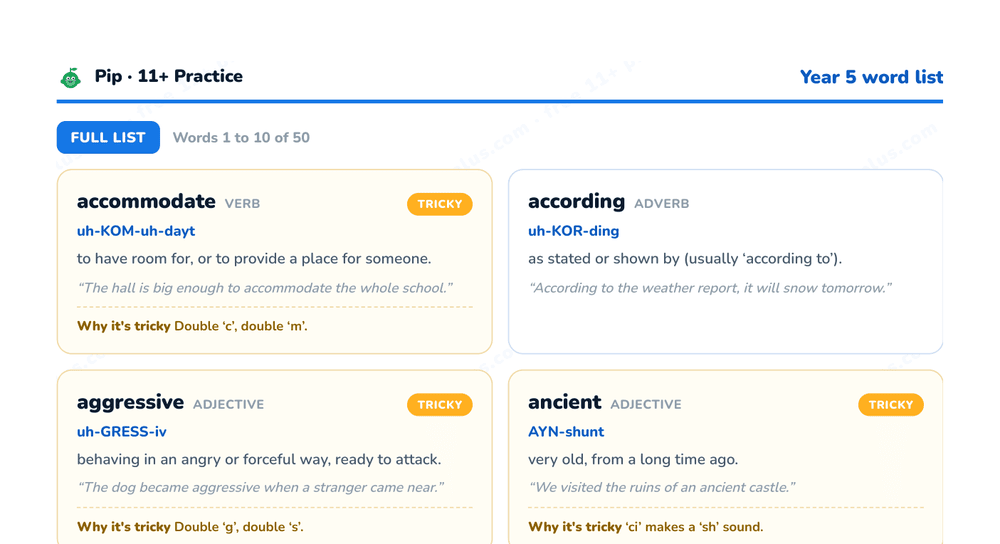 Year 5
PDF
Year 5
PDF
A Year 5 selection from the Years 5/6 statutory spelling list, with meanings and examples.
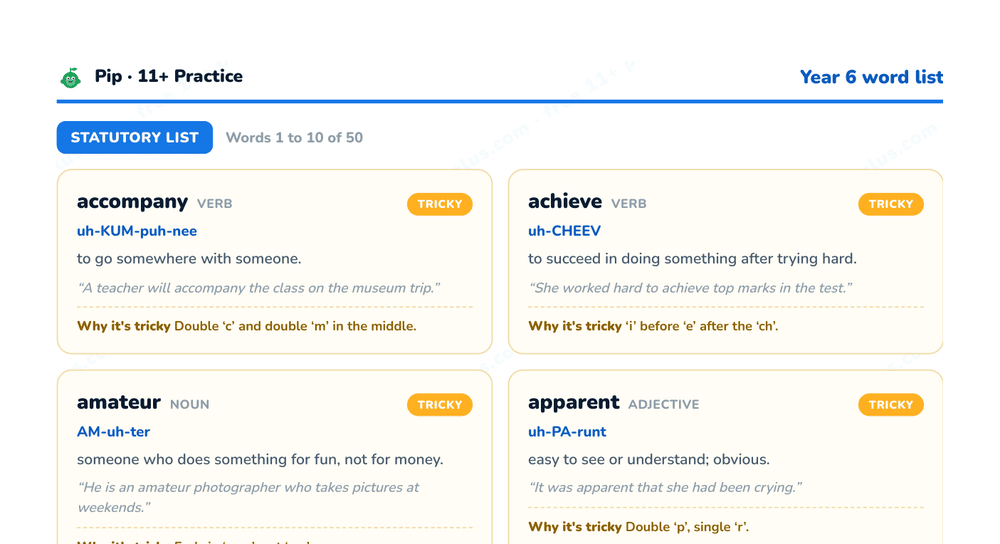 Year 6
PDF
Year 6
PDF
Year 6 statutory-list and stretch words, with meanings and examples.
Start with the test your child will sit if you know it. If not, use one untimed subject paper to learn what needs attention, then check the local admissions guidance.
| Your situation | Start with | Why |
|---|---|---|
| You know the exam board or region | A matching style collection, such as Kent, CSSE or GL | It helps your child become familiar with relevant question types. Check the current official format and timing too. |
| You do not know the format yet | The GL Assessment style paper, then read the 11+ exam types guide | GL style multiple choice is the most widely used shape of 11+ paper, so it is the safest starting point while you confirm the format with the school or local authority. |
| Starting early, in Year 4 or early Year 5 | A single subject paper: Maths or English, untimed | A short paper on one subject builds skills without the exhaustion of a full mock, and it shows you where the gaps are before you spend money on anything. |
| Reasoning needs attention | Verbal Reasoning or Non-Verbal Reasoning | Try one set and mark it together, then practise the specific question families that caused difficulty. |
| Spatial or cube questions are tricky | The NVR paper, spatial reasoning guide and nets and cubes walkthrough | A visual explanation can help before attempting another timed set. |
| A few weeks to go, wanting a full rehearsal | A format paper, sat in one timed sitting | At this stage the value is in stamina, pacing and the answer sheet, not in learning new content. |
A printed paper becomes useful exam rehearsal when the setting, timing and review are deliberate. Follow these four steps, then read when mock exams help and when they do not.
Use A4 and include any separate answer sheet when the test format uses one. Some papers use written responses instead.
Choose a quiet table and follow the timing on that paper's guide. If this is a first attempt, starting untimed is fine.
Use the included answers or mark scheme. Revisit wrong answers and guesses, asking what method the question called for.
Separate topic gaps from slips. Spend the next few sessions practising those skills in Pip before sitting another paper.
Each original Pip PDF is ready to print and includes questions plus answers or a mark scheme. The response format depends on the test, so check the guide for the paper you choose.
Papers are useful for exam rehearsal, but a familiar paper offers less new practice on a second sitting. Between papers, Pip offers repeatable activities in Maths, English, Verbal Reasoning and Non-Verbal Reasoning, with immediate answer feedback and adaptive next steps.
Yes, every practice PDF is free to download and print. Enter your email and the download starts at once.
Yes; each PDF includes answers or a mark scheme. The exact marking format varies by paper.
There are 14 collections: ten exam-style formats and four subject collections. The Maths collection includes two separate printable papers.
Yes; the subject collections cover English, Maths, Verbal Reasoning and Non-Verbal Reasoning. You can also practise these subjects in the free Pip app.
No; Pip's papers are original practice, not official past papers. Some exam organisers publish their own past or familiarisation materials, so check the official links above too.
No; some tests use separate multiple-choice answer sheets, while others include written answers or creative writing. Check the format on each paper's guide and with your exam organiser.
If you know the local test, choose its matching style collection. Otherwise, try an untimed subject paper first and confirm the exam format with the school or local authority.
Print the PDF and any response sheet it uses, follow the timing on its guide, then mark it together. Use the mistakes to choose a few skills to practise before the next paper.
The free Pip app offers repeatable practice with fresh generated questions and instant feedback across Maths, English, Verbal and Non-Verbal Reasoning. Pip Pro adds interactive lessons and timed mock papers.
Yes; the Year 4, Year 5 and Year 6 word-list PDFs are free to download, with meanings and examples. Pip also has interactive vocabulary tools.
Use the free PDF for a sit-down practice, then keep going with fresh app activities, immediate feedback and an adaptive next question. Pip Pro adds lessons and timed mock papers.