
Verbal ability + English comprehension
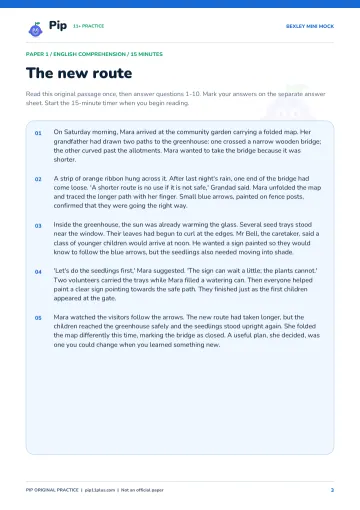
Word relationships and reading questions test language and understanding. Read the passage carefully, then choose the single best answer where instructed.
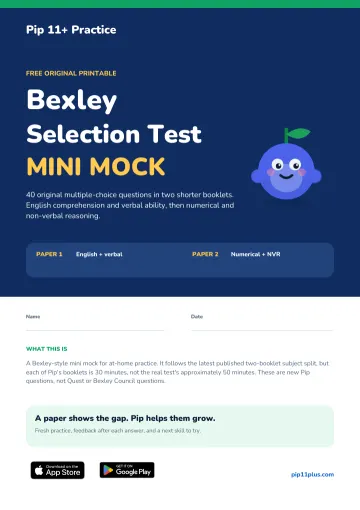
Try the real shape of the Bexley test at home: two shorter, original booklets covering verbal ability, English comprehension, numerical reasoning and non-verbal reasoning. Print the separate answer sheet, then use the worked answers to find the next skill to practise.
Important: this is a shorter Pip mini mock, not a full-length or official Quest test. It is free to download.
Verbal ability · English comprehension
Numerical · non-verbal reasoning
Thanks! Your download is on its way.
We'll only use your email to send this and, if you tick the box, our tips.
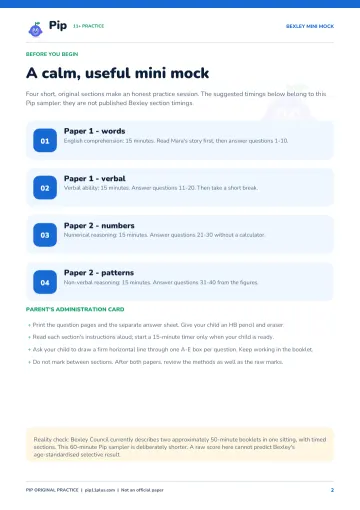
The latest published Bexley format is provided by Quest Assessments: each real booklet lasts about 50 minutes and contains timed sections. Our shorter mini mock follows the broad two-booklet division, not the real paper's unpublished item count or section times.
Word relationships and reading questions test language and understanding. Read the passage carefully, then choose the single best answer where instructed.
Apply Maths learned by the end of Year 5 and solve visual patterns. The real paper is multiple choice, with answers transferred to a separate sheet.
The 2026 sitting for September 2027 entry has passed; check future test dates with Bexley Council rather than reusing an old registration window. The latest published format is described by Quest's parent guidance.
A joined practice experience: two original mini booklets, a separate mark sheet and explanations that tell you what to do after marking.
Original multiple-choice word and reasoning items to reveal which language moves need attention.
More free verbal reasoning →Read an original passage, infer from evidence and check each answer against the text.
Comprehension worksheets →Apply Year 5-level Maths methods rather than racing through unsupported tricks.
More free Maths papers →Work through original figures and rule changes, then inspect the worked visual explanation.
More free NVR practice →Use the mini mock to spot a pattern, not to predict a selective score. The separate answer sheet and worked key make review part of the experience.
Timed practice is most useful when a child is ready for it. You can begin untimed, then try a fresh paper under timed conditions later.
Have a pencil and eraser ready. Show your child how to mark one clear horizontal line for their chosen answer, then check the question number.
Use the shorter timings printed in Pip's PDF. Pause between booklets; a short practice sitting should not be presented as the official 50-minute-per-paper test.
Use the worked explanations to distinguish a reading slip, a missing method and a rushed guess. A raw Pip score is not an age-standardised Bexley selection score.
Choose one skill to revisit. The free app gives fresh questions and feedback after each answer, so your child can act on what the paper revealed.
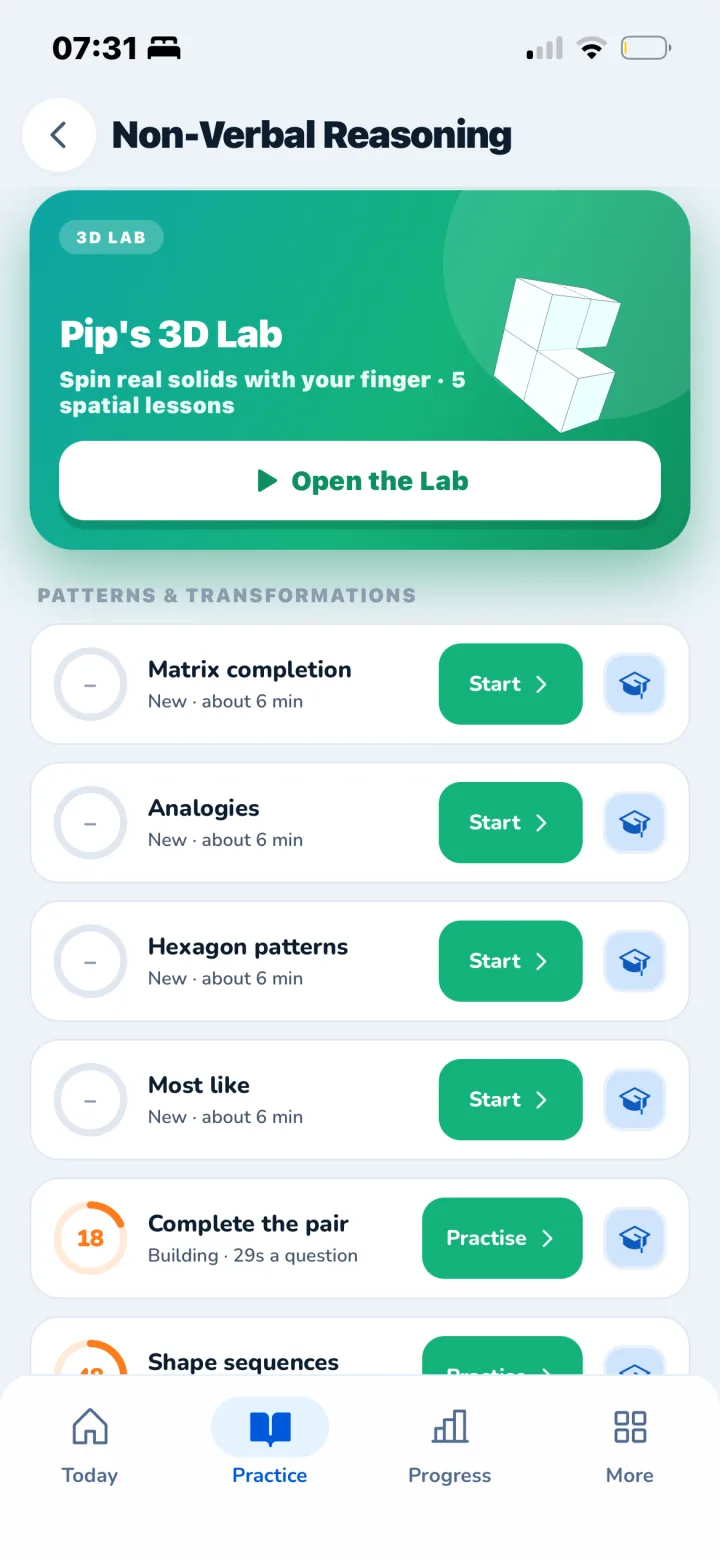
A paper can show where a child hesitated. Pip gives them fresh questions in Maths, English, Verbal and Non-Verbal Reasoning, with feedback after every answer and a level that responds to their work.
Free practice is repeatable. Pip Pro adds interactive Pip Teaches lessons and timed mock papers.



Do not reduce the sitting to a single percentage. Look for the idea your child did not yet see, then practise that idea with fresh examples.
Explore the relationship: synonym, contrast, category or code. Start with a worked example before another timed set.
Free VR paper →Find the line in the passage. Compare the wording of each option to what the passage actually says.
Free comprehension sheet →Rebuild the calculation without a clock. Pip can step down to a building-block skill when needed.
Free Maths word problems →Describe what changes and what stays fixed before picking an option. Try a fresh figure, not the memorised answer.
Free NVR paper →The 2026 Bexley sitting for 2027 entry has passed, and future dates, provider arrangements and registration rules can change. This format description reflects the latest Bexley Council and Quest guidance checked on 26 September 2026.
No. This original Pip mini mock is shorter than Bexley's real booklets and is not a Quest paper, past paper or prediction; use Quest's official familiarisation materials too.
The latest published Bexley format has two timed paper booklets taken on the same day, each lasting about 50 minutes. Paper 1 covers verbal ability and English comprehension; Paper 2 covers numerical and non-verbal reasoning.
Yes. The PDF includes a separate answer sheet, an answer key, worked explanations and a skill-by-skill review so you can decide what to practise next.
No. A raw mark on this shorter, original practice paper cannot predict a Bexley selective result because the real test uses its own scoring and age standardisation; use missed questions to choose skills to practise, not to forecast a pass.
Independent providers have offered supervised Bexley-style mocks, but we have not verified a bookable future sitting. Check whether a provider's paper reflects Quest, what feedback and access arrangements are included, and its current venue and date; Pip's PDF is an at-home resource, not an in-person session.
Mark the four skill areas separately, then choose one error pattern for fresh questions and immediate feedback in Pip's free English, Maths, Verbal or Non-Verbal Reasoning practice. Pip Pro adds interactive lessons and timed mock papers.
Start with the free mini mock. After marking, keep the progress going with fresh practice in Pip.