The short answer
There is no single practice score that means a child will pass. Papers vary in level and real results are often age standardised. Look for a rising score on the same type of paper, balanced subject results and fewer rushed errors.
- One score to aim for
- There is no safe universal percentage
- Best comparison
- The same paper type under the same rules
- More useful than a total
- Scores by topic and error type
- When to add timing
- After the method is secure
Why one percentage can mislead
A score of 75% can look strong. It may come from an easy paper, extra time or topics your child knows well. A lower score on a hard paper may show more skill.
Real 11+ scores may be changed for age and paper level. A raw practice mark is not the same as a school pass mark. Use it as a learning clue, not a promise.
Use a fair score check
Keep the paper source, subject, time limit and help level the same. Then compare like with like.
Write down the total, each topic score and why marks were lost. A steady rise across three checks matters more than one great day.
Turn what you learn into a simple practice plan
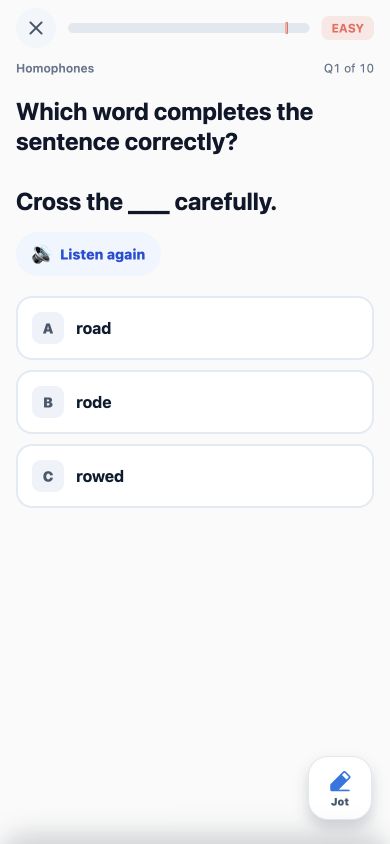
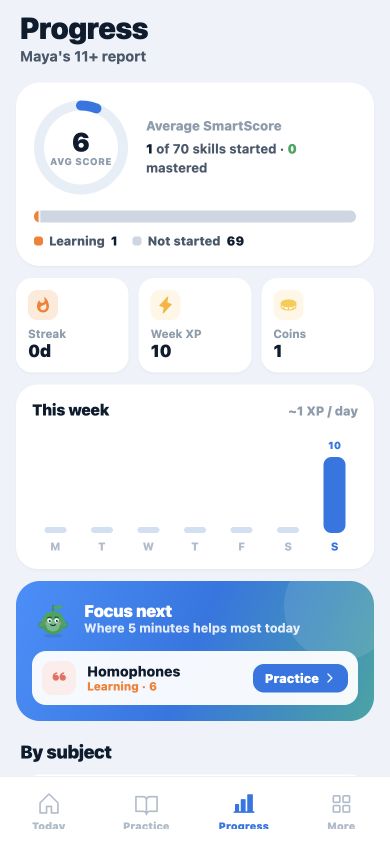
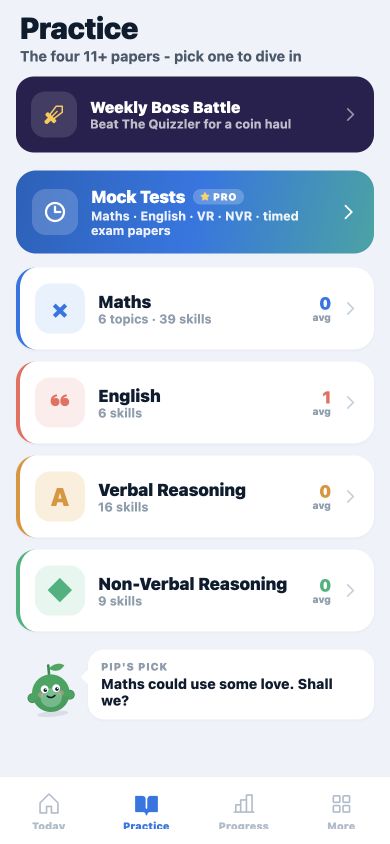
Pip gives short English, maths and reasoning practice. Parents can see scores, focus areas and recent work.
- Free daily practice
- Instant answers and clear feedback
- Progress that is easy to check



What the score should tell you
The score should point to the next job. A child may know the maths but lose time. Another may finish fast but miss key words. Those children need different practice.
When a score is a warning
Take care if one subject stays far below the rest, scores fall once timing starts, or the same mistake keeps coming back. Go back to short, calm skill work before another full paper.
A simple parent checklist
| Pattern | What it may mean | Next step |
|---|---|---|
| Score rises slowly | Skills are growing | Keep the routine steady |
| High untimed, low timed | Speed or pressure is the gap | Use short timed sets |
| One subject is much lower | A real subject gap | Work by topic |
| Scores jump up and down | Papers or conditions differ | Make checks more alike |
Keep practice calm, short and useful
Pip helps children practise a little each day. It helps parents see what to do next without another long paper.
Sources and checks
Rules and dates can change. Check the official source before you act.
Questions parents ask
Is 80% a good 11+ practice score?+
It may be, but it depends on the paper and school. Do not treat one percentage as a pass forecast.
Should I compare my child with other children?+
Compare progress with their own earlier work first. Other children may use different papers and rules.
How often should we test?+
Use short topic checks often. Save full papers for planned points so they do not take over learning.