Britain's boarding schools are among the most famous in the world, pairing outstanding academics with a full-time community that shapes character as much as grades. Below are our ten best boarding schools in the UK, ranked on a blend of 2025 results, academic reputation and how selective they are. For each one you will find who it is for, the entrance exam it sets, when children join, and why it earns its place. These are fee-paying schools, though most offer generous bursaries, and the "best" school is always the one that fits your child.
- Our ten span boys', girls' and co-ed boarding; Eton, Winchester and Harrow lead the historic boys' schools.
- These are fee-paying schools, with boarding fees higher than day fees, though most offer substantial bursaries.
- Most use the ISEB Common Pre-Test (English, maths, verbal and non-verbal reasoning) at 13+, or their own English and maths papers at 11+.
- Register early, often by Year 5, and prepare across the skills each one tests.
How we ranked them
There is no single official ranking of boarding schools, so we used a transparent blend of three things: the most recent published exam results (2025 A-level grades at A*/A, IB scores where relevant, and GCSE strength), academic and pastoral reputation, and selectivity. We also weighed standing and consistency over time, and tried to reflect the range of boys', girls' and co-educational schools.
Two honest caveats. First, every school here is exceptional, so the order separates outstanding from outstanding, and any would be a superb choice. Second, independent schools are inspected by the ISI rather than Ofsted, and results, fees and admissions change every year, so treat the detail as a 2025/2026 snapshot and always confirm the latest on each school's own website. Pip is not affiliated with any school or exam board.
1Eton College

- Who it's forBoys' school, full boarding · Windsor, Berkshire (SL4)
- Entrance examRegister by the end of Year 5, then the ISEB Common Pre-Test and Eton's own assessment; the place is confirmed by Common Entrance or a scholarship exam in Year 8
- Entry points13+ only
- ResultsAround 80% of A-levels at A*/A and roughly 96% of GCSEs at the top grades, with an elite Oxbridge and US record
Founded in 1440, Eton is the most famous school in the world and a full-boarding institution that has educated 20 British prime ministers. Entry is at 13+ only: boys register by the end of Year 5, sit the ISEB Common Pre-Test, then go through Eton's own assessment, with the place confirmed later. Its needs-blind bursary programme means a significant number of boys pay reduced or no fees. See our complete Eton entrance exam and admissions guide for the current stages, past papers and fees.
2Winchester College
- Who it's forBoys' school moving to co-education, boarding · Winchester, Hampshire (SO23)
- Entrance examISEB Common Pre-Test in Year 6, an interview, then Winchester's own entrance exams in Year 8
- Entry points13+ and 16+
- ResultsAround 82% of A-levels at A*/A and roughly 87% of GCSEs at grade 9 to 7 in 2025
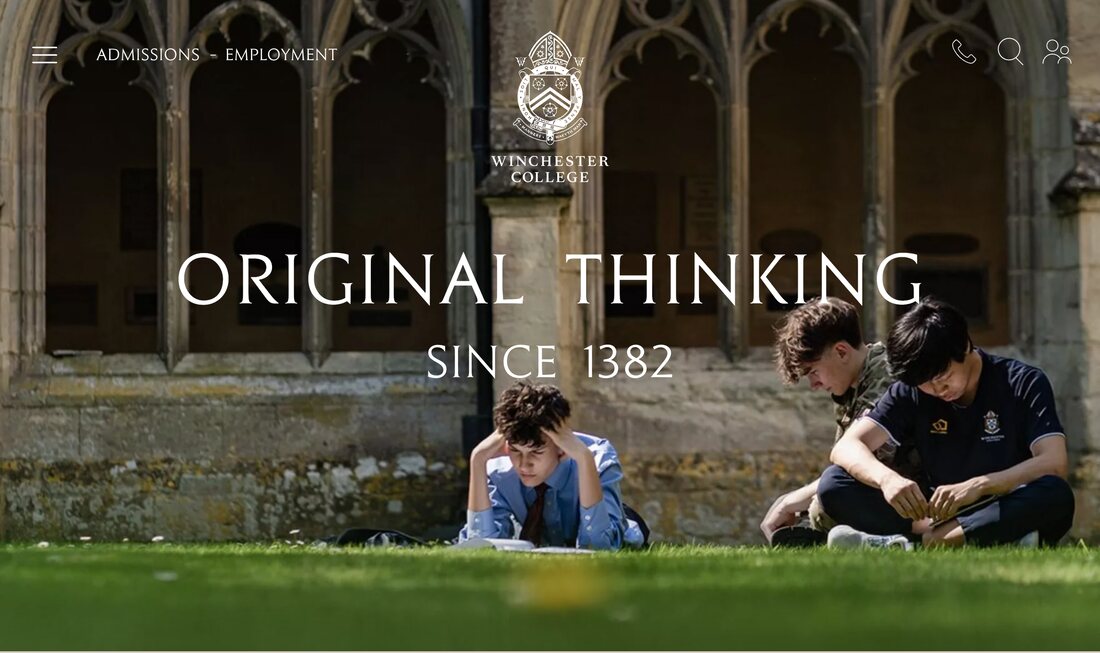
Founded in 1382, Winchester is one of the oldest and most intellectually serious schools in the country, famous for its independent-minded teaching and its scholarship community. Entry is at 13+: boys sit the ISEB Common Pre-Test in Year 6, attend an interview, and successful candidates sit Winchester's own entrance exams in Year 8. The school is becoming fully co-educational.
3Harrow School
- Who it's forBoys' school, full boarding · Harrow-on-the-Hill, north-west London (HA1)
- Entrance examRegister early, then the ISEB Common Pre-Test and the school's own assessment and interview, with the place confirmed by Common Entrance or a scholarship
- Entry points13+
- ResultsConsistently strong results with a long record of sending boys to leading universities
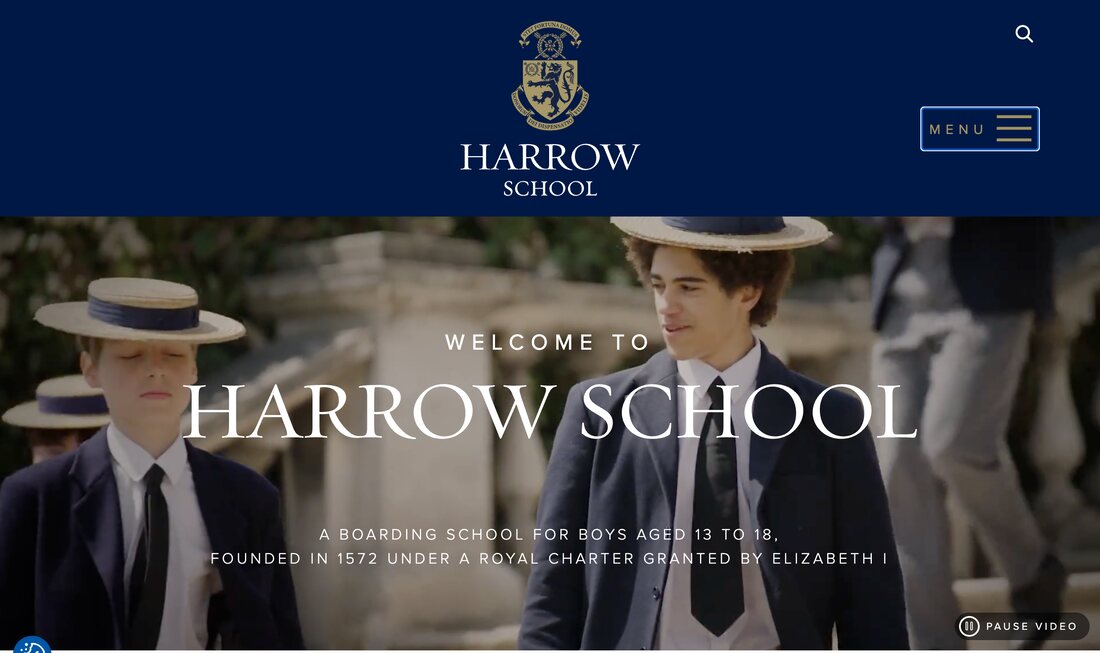
Founded in 1572, Harrow is one of Britain's most iconic boarding schools, set on its own hill in north-west London and famous for educating Winston Churchill and seven other prime ministers. It is a full-boarding school built around its historic houses, and entry is at 13+ through the ISEB Common Pre-Test and the school's own assessment.
4Wycombe Abbey
- Who it's forGirls' school, full boarding · High Wycombe, Buckinghamshire (HP11)
- Entrance examStage 1 is an online CAT4 cognitive test in November; Stage 2 is an assessment day with English and maths exams, an interview and group tasks
- Entry points11+, 13+ and 16+
- ResultsRegularly one of the top-performing girls' schools of any kind in the country
Wycombe Abbey is widely regarded as the leading girls' boarding school in the country, with results that sit among the very best nationally. The 11+ process is two-stage: an online CAT4 cognitive test in November, then an assessment day with English and maths papers based on the Key Stage 2 curriculum, an interview and group activities. Academic, close-knit and steeped in tradition.
5Cheltenham Ladies' College
- Who it's forGirls' school, boarding and day · Cheltenham, Gloucestershire (GL50)
- Entrance examThe school's own entrance assessment in English, maths and reasoning, with an interview
- Entry points11+, 13+ and 16+
- ResultsAround 90% of GCSEs at A*/A in 2025, with strong A-level results too
Founded in 1853, Cheltenham Ladies' College is a trailblazer in girls' education and one of the largest and most prestigious girls' schools in the country. It offers boarding and day places, and entry is through the school's own assessment in English, maths and reasoning, plus an interview. It is known for outstanding science, leadership and a strong sense of community.
6Wellington College
- Who it's forCo-educational, boarding and day · Crowthorne, Berkshire (RG45)
- Entrance examISEB Common Pre-Test at 13+ plus the school's own assessment and interview; 11+ entry uses the school's own papers
- Entry points11+, 13+ and 16+
- ResultsStrong results at both A-level and the IB, with a leading reputation for pupil wellbeing
Founded in 1859, Wellington College is one of the country's leading co-educational boarding schools, set on a grand campus in Berkshire. It is well known for pioneering work on wellbeing and character alongside strong academics, and offers both A-levels and the International Baccalaureate. Entry at 13+ uses the ISEB Common Pre-Test and the school's own assessment.
7Rugby School
- Who it's forCo-educational, boarding and day · Rugby, Warwickshire (CV22)
- Entrance examISEB Common Pre-Test at 13+ plus the school's own assessment and interview; 11+ entry uses the school's own papers
- Entry points11+, 13+ and 16+
- ResultsConsistently strong results and a rich all-round programme
Founded in 1567, Rugby School is one of the great historic boarding schools, the birthplace of rugby football and the setting for Tom Brown's Schooldays. Now co-educational, it combines a famous heritage with strong academics, sport and the arts. Entry at 13+ is through the ISEB Common Pre-Test and the school's own assessment, with 11+ places available too.
8Marlborough College
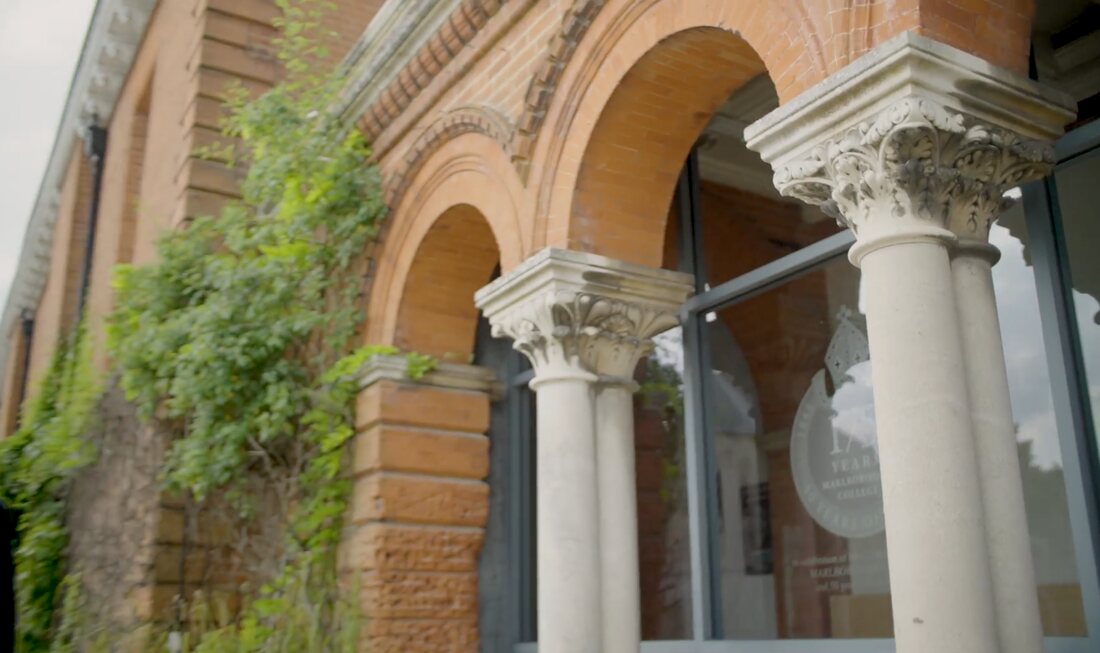
- Who it's forCo-educational, full boarding · Marlborough, Wiltshire (SN8)
- Entrance examISEB Common Pre-Test at 13+ plus the school's own assessment and interview
- Entry points13+ and 16+
- ResultsStrong, well-rounded results with a particular strength in the arts
Founded in 1843, Marlborough College is one of the best-known co-educational full-boarding schools in the country, set in a striking Wiltshire campus. It was one of the first traditional boys' schools to admit girls and counts the Princess of Wales among its alumnae. Entry is mainly at 13+ through the ISEB Common Pre-Test and the school's own assessment.
9Sevenoaks School
- Who it's forCo-educational, boarding and day · Sevenoaks, Kent (TN13)
- Entrance examThe school's own entrance assessment in English, maths and reasoning, with an interview
- Entry points11+, 13+ and 16+
- ResultsAn International Baccalaureate school whose results are consistently among the best in the country
Founded in 1432, Sevenoaks is a leading co-educational school with a strongly international outlook, and it teaches the International Baccalaureate Diploma rather than A-levels in the sixth form, with results that rank among the very best nationally. Entry is through the school's own assessment in English, maths and reasoning, plus an interview, at 11+, 13+ and 16+.
10Benenden School
- Who it's forGirls' school, full boarding · Cranbrook, Kent (TN17)
- Entrance examThe school's own entrance assessment, with an interview
- Entry points11+, 12+ and 13+
- ResultsStrong academic results within a close, full-boarding community
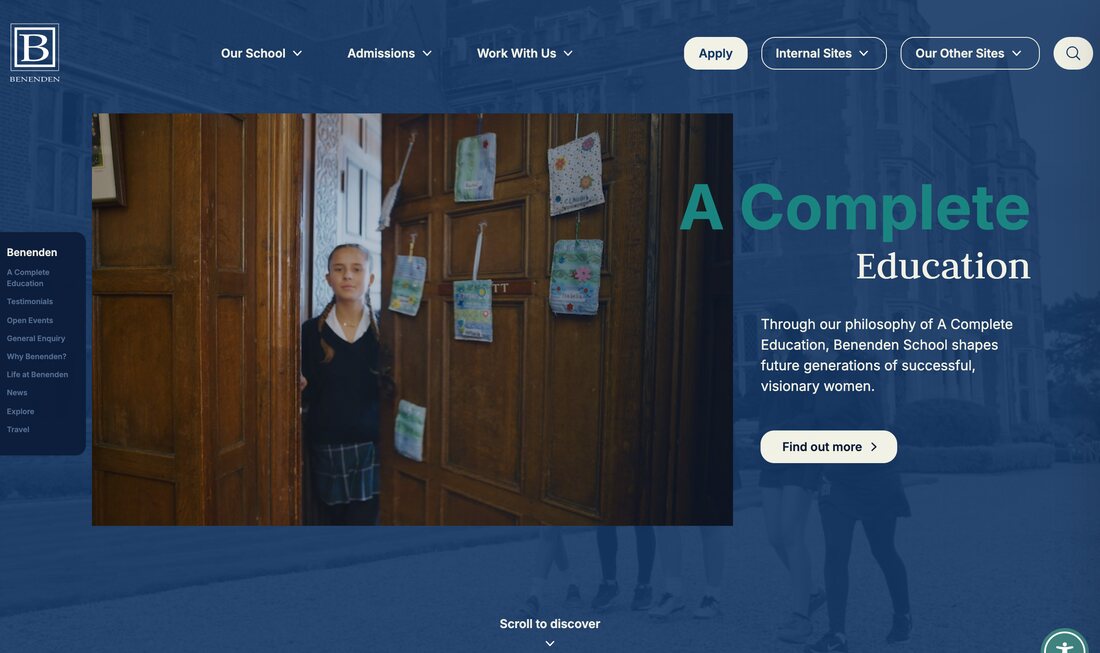
Benenden is one of the country's leading girls' boarding schools and unusual in being fully boarding, every girl boards, which gives it a distinctive, close-knit community. Set in a large Kent estate, it counts the Princess Royal among its alumnae. Entry is through the school's own assessment and interview, at 11+, 12+ and 13+.
What is a boarding school and how does boarding work?
A boarding school is a school where pupils live on site during term time rather than going home each evening. They sleep in a boarding house, eat most meals at school, and follow a structured day of lessons, supervised prep, sport and activities, all overseen by resident house staff such as a housemaster or housemistress and a matron. Most pupils go home for the holidays and for set weekends, known as exeats, and many schools also run a half-term break in the middle of each term.
Boarding is not all or nothing. The same school often offers more than one pattern, so a family can choose how much a child actually boards. That choice is the first thing to understand when you compare schools.
Types of boarding: full, weekly and flexi
There are three common boarding patterns, and the right one depends on how far you live from the school and how much time you want your child at home.
- Full boarding: the child lives at school throughout term, including most weekends, going home for exeats and holidays. It suits families who live far away or overseas, and it gives the fullest version of boarding life.
- Weekly boarding: the child boards Monday to Friday and comes home at weekends. It blends the structure of boarding with family time, and works well for families within reasonable travelling distance.
- Flexi boarding: the child boards a set number of nights each week, often one to three, by arrangement. It is the gentlest introduction to boarding and a popular way to ease younger children in.
Boarding school fees in 2026 and the 20% VAT change
Boarding is a significant investment. Full boarding at the leading schools commonly runs from around 40,000 to over 60,000 pounds a year, with weekly and flexi boarding costing less because the child spends fewer nights at school. Day places at the same schools are cheaper again.
The big recent change is tax. From January 2025, private school fees in the UK carry 20 percent VAT, which pushed headline fees up at most schools. Always check each school's current fee schedule, and ask what the fee includes, since extras such as trips, music lessons and exam entry can add up. The cost is real, but it is not the whole picture, because financial support is more widely available than many families expect.
Scholarships, bursaries and financial support
Two different kinds of help exist, and it is worth knowing the difference. Scholarships are awarded for talent, in academics, music, sport, art or drama, and these days the cash value is often small and honorary. Bursaries are means-tested on family income and assets, and these are where the real money is. At many schools a bursary can cover a large share of the fees, and some reach up to 100 percent for families who need it.
If fees look out of reach, do not rule a school out before you have asked. Contact the admissions office early, because bursary funds are limited and often allocated well ahead of entry.
State boarding schools: the affordable alternative
There is a lesser known option that costs far less. England has around 35 state boarding schools, where the education itself is funded by the state and free, and families pay only for boarding and meals. That brings the total down to a fraction of a private boarding fee.
Places are open to British citizens and children with the right to live in the UK, and demand is high, so apply early. For families who want the boarding experience without independent school fees, it is the single best value route.
Best girls' boarding schools in the UK
Several of the strongest boarding schools in the country are all-girls schools. On our ranked list, Wycombe Abbey is the leading academic girls' boarding school, Cheltenham Ladies' College is one of the most famous, and Benenden is unusual in being fully boarding, where every girl boards. Single-sex girls' schools are popular with families who want a focused environment through the senior years.
Best boys' boarding schools in the UK
The historic boys' boarding schools are the names most people picture first. Eton College, Winchester College and Harrow School top our list, each a full-boarding boys' school with a long record at the most competitive universities. Some boys' schools also admit girls into the sixth form, so it is worth checking each school's policy at 16+.
Co-educational boarding schools
Co-educational schools, where boys and girls learn together, are increasingly the norm. Wellington College, Rugby School, Marlborough College and Sevenoaks School are leading co-ed boarding schools on our list. Lessons and activities are mixed, while boarding houses are usually single-sex, and many families like that it mirrors the world children grow up into.
Boarding schools by nation: England, Scotland and Wales
Most UK boarding schools are in England, and as independent schools they are inspected by the Independent Schools Inspectorate rather than Ofsted. Scotland has its own respected boarding schools and a distinct system, with pupils often working towards Highers alongside or instead of A-levels. Wales has a smaller number of well regarded boarding schools too. If location matters, decide early which nation suits your family, since the qualifications and term structure can differ.
Prep, junior and primary boarding (ages 7 to 13)
Boarding does not only start at senior level. A number of prep and junior schools take boarders from around age 7 or 8, preparing children for senior entry at 11+ or 13+. Boarding this young is far less common than it once was, and most prep boarders start with flexi or weekly boarding close to home. For many families, day prep followed by senior boarding is the gentler path.
Sixth-form and IB boarding schools
Entry at 16+, straight into the sixth form, is one of the most popular points to join a boarding school, and it is especially common among international students. In the sixth form, schools offer either A-levels or the International Baccalaureate Diploma. Sevenoaks, for example, teaches the IB rather than A-levels. If your child is aiming for a 16+ start, look closely at which qualification each school offers and how it fits their university plans.
How to apply: admissions, entry points and timeline
Boarding admissions reward families who start early. The main entry points are 7+, 11+, 13+ and 16+, and the most sought-after schools fill up first, so registration often happens a year or two ahead, occasionally more. A typical route looks like this:
- Register your interest with the school, sometimes by Year 5 for 13+ entry.
- Assessment. Most 13+ schools use the ISEB Common Pre-Test, while 11+ schools usually set their own English and maths papers. Overseas families may sit the UKiset.
- Interview and a visit, where the school looks for fit as much as marks.
- Offer, often made conditional on a later exam such as Common Entrance or a scholarship paper.
Whatever the entry point, the assessment comes down to English, maths and reasoning, which is exactly what steady practice builds.
Almost every school here tests English, maths and reasoning, whether through the ISEB Common Pre-Test or its own papers. Pip builds all four with unlimited, exam-style questions and free downloadable papers, Maths, English, Verbal Reasoning and Non-Verbal Reasoning. It helps to understand how the ISEB Pre-Test works and whether an independent school is right for your family.
One free app for every school on this list
Top boarding schools test some mix of English, maths and reasoning. Pip turns them into five calm minutes a day, adaptive, exam-style, and genuinely free.



Frequently asked questions
What is the best boarding school in the UK?+
Eton College is the most prestigious boys' boarding school, Winchester College the most academically rigorous of the historic schools, and Wycombe Abbey the leading girls' boarding school. The best one for your child depends on whether you want a boys', girls' or co-educational school, and full or weekly boarding.
How do you get into a top boarding school?+
Register early, often by Year 5, then sit the entrance assessment. Most 13+ boarding schools use the ISEB Common Pre-Test, followed by an interview and a later Common Entrance or own exam; schools with 11+ entry usually set their own English and maths papers. Confirm each school's process and deadlines well in advance.
How much do boarding schools cost?+
Full boarding fees at leading schools commonly run from around 40,000 to over 60,000 pounds a year. Most schools offer means-tested bursaries, some worth up to the full fee, along with academic, music and sport scholarships, so it is always worth asking each school about financial support.
What is the difference between boarding and day school?+
Boarding pupils live at school during term, in a 24-hour community with pastoral care, evening activities and supervised prep, while day pupils go home each night. Many schools offer full, weekly or flexi boarding, so families can choose how much a child boards.
When should you start applying to boarding school?+
Early. For 13+ entry, families often register in Year 5, sit the ISEB Common Pre-Test in Year 6, and complete interviews and assessments over the following two years. The most sought-after schools, such as Eton and Winchester, may expect registration several years in advance.
What is the difference between full, weekly and flexi boarding?+
Full boarding means living at school throughout term, including most weekends. Weekly boarding runs Monday to Friday with weekends at home. Flexi boarding is a set few nights a week by arrangement. Many schools offer more than one, so families choose how much a child boards.
At what age can a child start boarding school?+
The main entry points are 7+, 11+, 13+ and 16+. Some prep schools take boarders from around age 7 or 8, though boarding that young is less common now. The most popular senior entry points are 11+ and 13+, with many international pupils joining at 16+ for the sixth form.
What is a state boarding school?+
A state boarding school provides a free state-funded education, so families pay only for boarding and meals rather than tuition. That makes it far cheaper than private boarding. England has around 35, and demand for places is high.
Do boarding schools have VAT on fees now?+
Yes. From January 2025, private school fees in the UK carry 20 percent VAT, which raised headline fees at most independent boarding schools. State boarding schools are not affected in the same way, since their tuition is state funded.
What is the difference between a scholarship and a bursary?+
A scholarship is awarded for talent in academics, music, sport or the arts, and is often a small honorary amount today. A bursary is means-tested on family income and can cover a large share of the fees, sometimes up to 100 percent.

The Pip team builds Pip, the 11+ and KS2 practice app for children in years three to six. We write these guides from real exam formats and past papers.