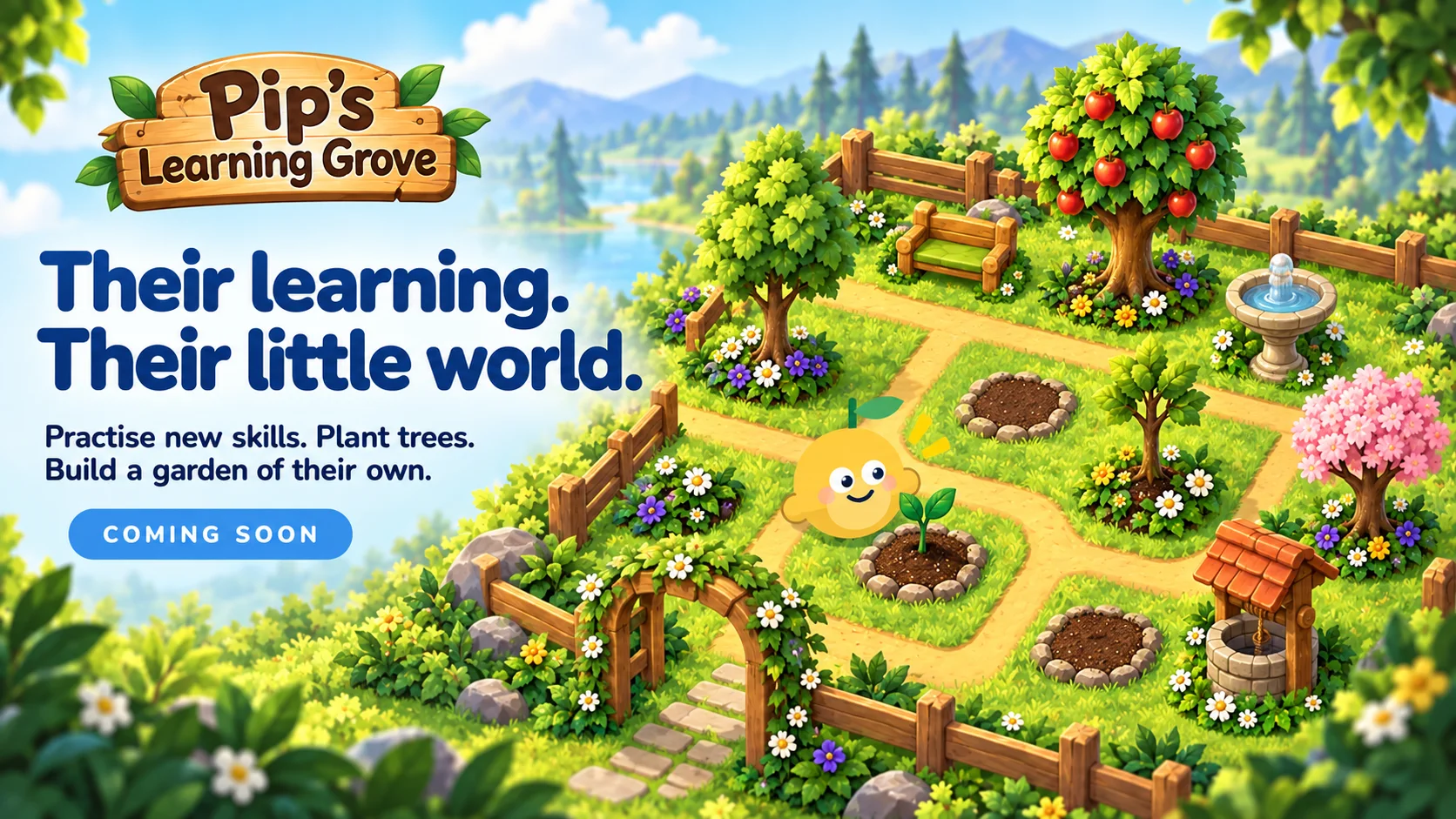
- Pip's Learning Grove, coming soon, turns your child's progress into a garden they can see.
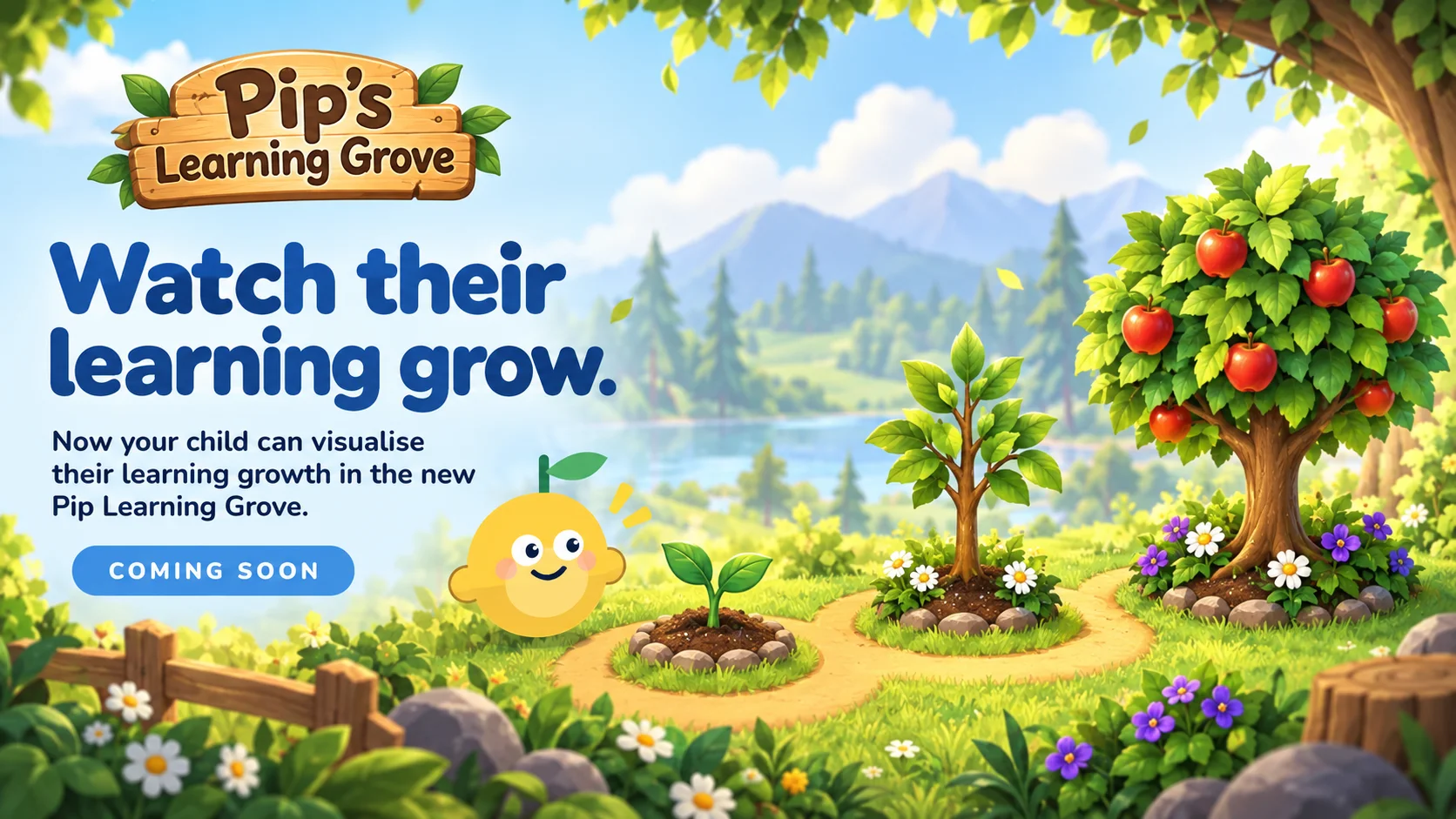
- Practising a new skill unlocks a seed; more practice grows it from sapling to blossom to fruit earned through mastery.
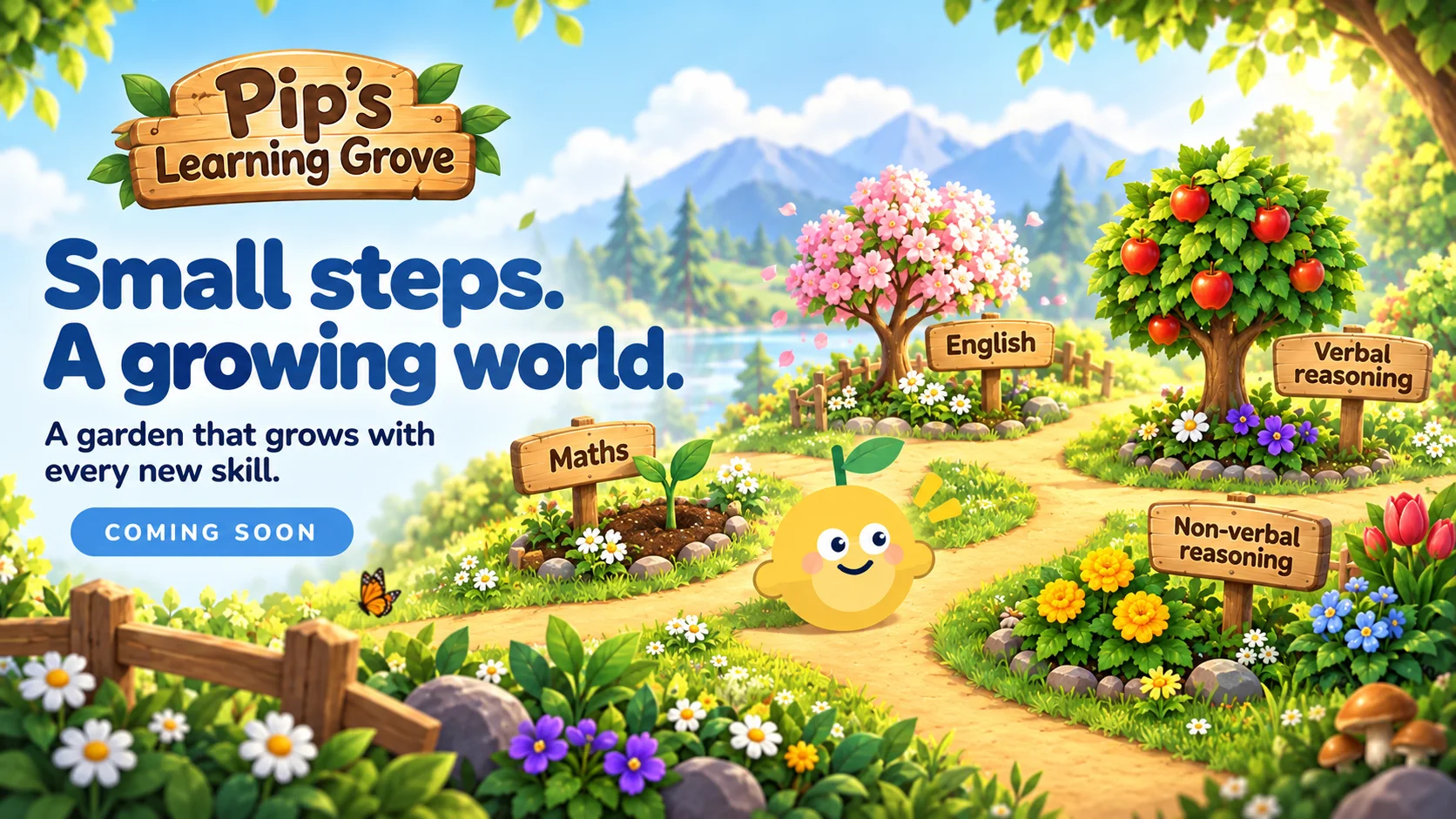
- There are four gardens: Maths, English, Verbal Reasoning and Non-Verbal Reasoning.
- Children can arrange their garden and feed fruit to Pip or sell it for coins, at half its shop price.
As parents, we often see the learning report first. We notice which areas need more practice, then explain to our child what they should work on next.
That information is useful, but we wanted to give children a way to understand their own progress too. Something they can explore for themselves, without feeling that they are being marked down or compared with anyone else.
Pip’s Learning Grove will turn that progress into a garden your child can build, explore and care for. Every new area of learning brings an opportunity to plant something.
As their understanding develops, their garden grows.
An empty plot becomes “I haven’t planted that yet.” A young tree becomes “This is growing.”
Blossom means they are getting closer to fruit. A tree bearing apples gives them something visible to celebrate: the learning they have worked on and mastered.
From first practice to first fruit
When your child starts practising a new skill, they will unlock a seed for the corresponding tree. They can visit its garden, choose a planting spot and plant it with Pip.
Further practice will help that tree develop. Your child will be able to see different stages of growth across their garden, from newly planted seeds and small saplings to blossoming trees and fruit earned through demonstrated mastery.
That gives them a simple way to choose what to do next. They might return to a small tree to help it grow, practise an area that is getting close to bearing fruit, or try something new so they can plant another seed.
The garden will give that choice a purpose they can understand. “I want to grow this tree” becomes a reason to practise.
Four gardens, plenty to discover
There will be separate gardens for Maths, English, Verbal Reasoning and Non-Verbal Reasoning, with individual trees representing the topics within them.
This keeps the learning organised while making progress easier to recognise. Your child might have well-established trees in one part of their Maths garden and new shoots in another.
Their English garden might be growing steadily while some Verbal Reasoning plots are still waiting to be planted.
Those differences are part of their own learning journey. An unplanted space is somewhere to begin.
It follows the same principle as our guide to keeping 11+ motivation healthy: make progress visible and celebrate effort, not only scores.
A smaller tree is something they can nurture. They can see possibilities for their next practice without needing a parent to point out every gap.
Their garden, their choices
Children will also be able to make the Grove their own. They can move their trees, connect areas with paths, add flowers, place fences and choose decorations.
Their customised Pip will explore alongside them and interact with the garden. As children learn, they will be building a place that reflects their effort and their own ideas about how it should look.
They can rearrange things whenever they want. A new tree might need a special corner, or a path might lead to their favourite planting area.
Planning and changing the garden is part of the experience.
Something to do with the harvest
When eligible trees bear fruit, children will be able to collect it and decide how to use it. They can feed their apples to Pip or sell them for in-game coins.
Those coins give them further choices about what to add to their garden. They might spend a little on flowers now or save for a decoration they really want.
Sold fruit will be worth half its shop purchase price, giving collecting, buying and selling a clear relationship.
Alongside the subject practice, these decisions create opportunities to think about saving, spending, planning and caring for something over time.
Our aim is to give children a garden where they can see what they have achieved, recognise where they could grow next and feel proud of what they are building.
Pip’s Learning Grove is coming soon to Pip 11+.
Practise new skills, plant trees and build a garden of their own.