In England, children start Reception the September after they turn 4 and finish Year 13 at 18. The years are grouped into key stages, and each one has its own tests and milestones.
This guide gives you the full ladder, a tool that works out your child's year from their birthday, and the tests coming up for them. It also shows how Scotland, Wales and Northern Ireland do it differently.
- The school year in England and Wales runs 1 September to 31 August. Your child's age on 31 August decides their year.
- Primary is Reception to Year 6 (ages 4 to 11). Secondary is Year 7 to Year 11 (ages 11 to 16), then sixth form to 18.
- Key stages: KS1 is Years 1 and 2, KS2 is Years 3 to 6, KS3 is Years 7 to 9, KS4 is Years 10 and 11.
- Big tests: phonics check (Year 1), times tables check (Year 4), SATs and the 11+ (Year 6), GCSEs (Year 11).
What year is my child in? Find out in 5 seconds
Enter your child's date of birth and where you live. The tool shows their school year, key stage and every test coming up, with dates.
School year finder
Nothing you type leaves this page.
Coming up for your child
In Years 3 to 6? Pip sets the right next question.
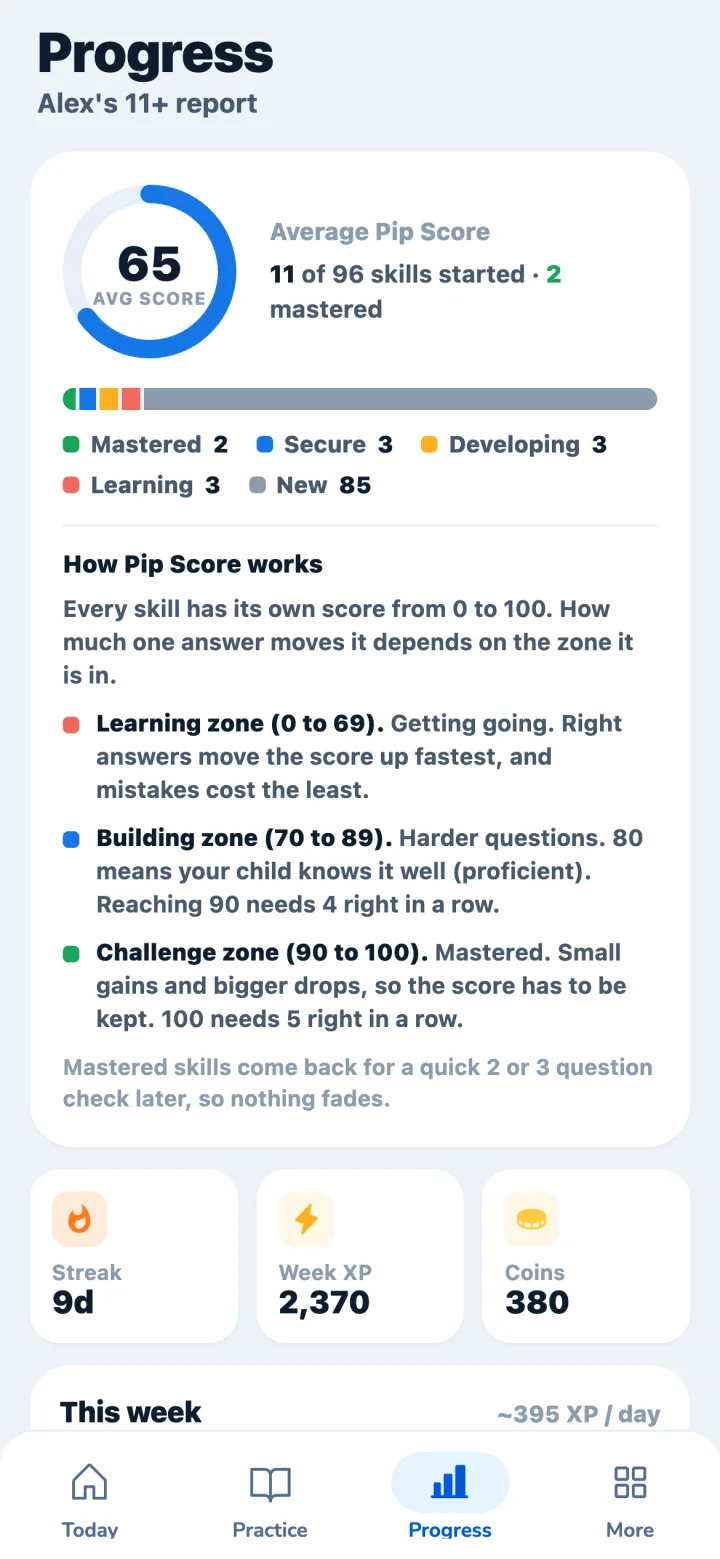
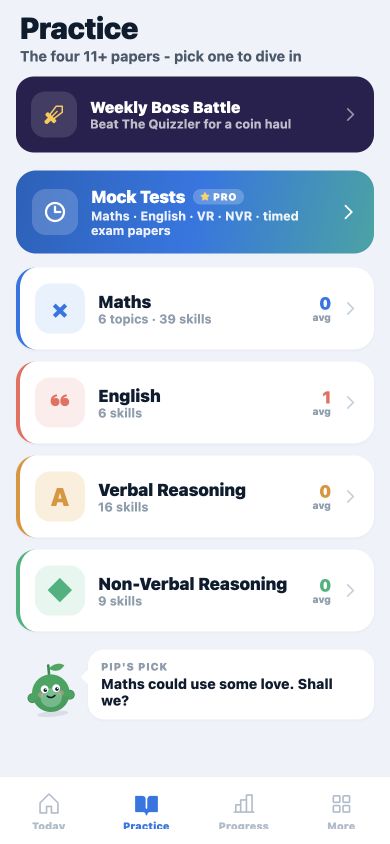
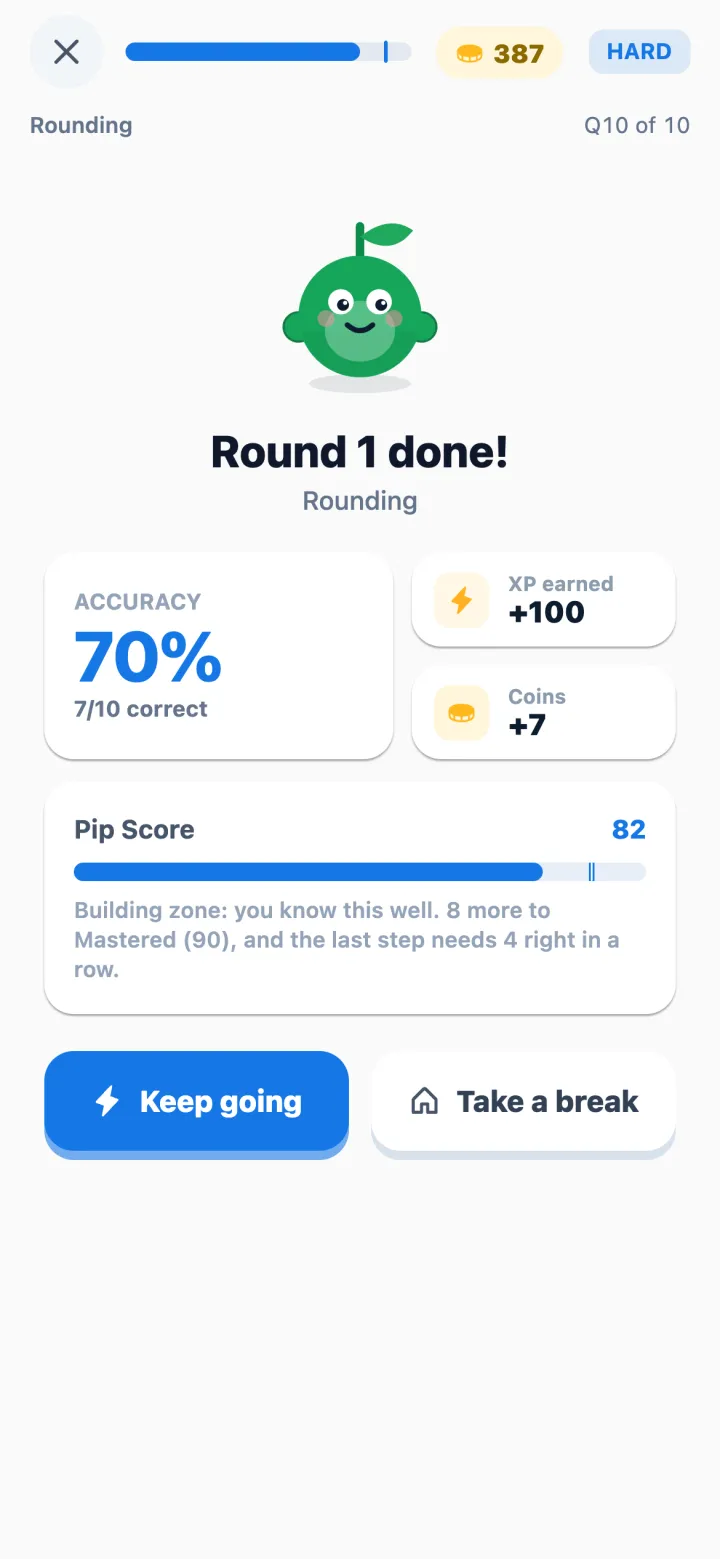
Pip is a free practice app for KS2 and the 11+. It gives a few minutes of maths, English and reasoning a day, and shows you exactly where your child sits on each skill.
- Times tables for the Year 4 check
- KS2 SATs and 11+ practice in one app
- A Pip Score for every skill



The school years at a glance
Tap any year to see the ages and what happens in it. Colours show the key stages, and the flags mark the big tests.
UK school years and ages table (England)
Ages are for the start and end of each school year. A child turns the older age at some point between 1 September and 31 August.
| School year | Age during the year | Key stage | School | Tests and milestones |
|---|---|---|---|---|
| Nursery | 3 to 4 | Early Years (EYFS) | Nursery or pre-school | 15 to 30 funded hours |
| Reception | 4 to 5 | Early Years (EYFS) | Primary or infant | Reception baseline check, EYFS profile |
| Year 1 | 5 to 6 | Key Stage 1 | Primary or infant | Phonics screening check (June) |
| Year 2 | 6 to 7 | Key Stage 1 | Primary or infant | KS1 tests (optional since 2024) |
| Year 3 | 7 to 8 | Key Stage 2 | Primary or junior | Move to juniors in some areas |
| Year 4 | 8 to 9 | Key Stage 2 | Primary or junior | Multiplication tables check (June) |
| Year 5 | 9 to 10 | Key Stage 2 | Primary or junior | 11+ registration (spring and summer) |
| Year 6 | 10 to 11 | Key Stage 2 | Primary or junior | 11+ (September), secondary application (31 October), KS2 SATs (May) |
| Year 7 | 11 to 12 | Key Stage 3 | Secondary | Start of secondary school |
| Year 8 | 12 to 13 | Key Stage 3 | Secondary | 13+ entry for some independent schools |
| Year 9 | 13 to 14 | Key Stage 3 | Secondary | Choosing GCSE options |
| Year 10 | 14 to 15 | Key Stage 4 | Secondary | GCSE courses start |
| Year 11 | 15 to 16 | Key Stage 4 | Secondary | GCSE exams (May and June) |
| Year 12 | 16 to 17 | Key Stage 5 | Sixth form or college | A levels, T levels or apprenticeship |
| Year 13 | 17 to 18 | Key Stage 5 | Sixth form or college | A level exams, university applications |
What are the key stages?
Key stages are the blocks the national curriculum in England is split into. Each one ends with a check on how children are doing.
Learning through play, early reading and number. Ends with the EYFS profile.
Phonics, reading, writing and number facts. Phonics check in Year 1.
Times tables, fractions, grammar and longer writing. Tables check in Year 4, SATs in Year 6.
The first years of secondary, with more subjects and specialist teachers.
GCSE courses, with exams at the end of Year 11.
Sixth form or college. Young people must stay in education or training until 18.
Key Stage 2 is the stage most parents ask us about, because it holds both the KS2 SATs and the 11+. Our Year 4, Year 5 and Year 6 guides break each year down.
How the 31 August cut-off works
In England and Wales, every child born between 1 September and 31 August is in the same year. So a child born on 31 August can be almost a full year younger than a classmate born on 1 September.
That gap matters most in the early years and in tests. It is why the 11+ is age standardised: younger children get a small boost so they are not penalised for their birthday.
Summer-born children
Children born between 1 April and 31 August are called summer-born. In England they do not have to start school until the September after they turn 5.
Parents can ask for a summer-born child to start in Reception at 5 rather than going straight into Year 1. The admission authority decides, so ask early and get the answer in writing.
Year 3 to 6? Start with ten minutes a day.
Pip covers the times tables check, KS2 SATs and the 11+ in one app, and moves up a level only when your child is ready.
The Year 6 calendar, month by month
Year 6 is the busiest year of primary school. Here is how it runs for children starting secondary in September 2027.
- Sept 202611+ tests in most grammar school areas
- Oct 202611+ results, then the secondary application deadline on 31 October
- 1 Mar 2027National Offer Day for secondary places
- 10 to 13 May 2027KS2 SATs week
- July 2027SATs results to schools and parents
- Sept 2027Start Year 7
For the 11+ side of this, see when 11+ results come out and what counts as a good 11+ score.
England, Wales, Scotland and Northern Ireland compared
Each nation runs its own school system. The names and the cut-off dates are different, so the same child can be in a different year depending on where they live.
Cut-off 31 August.
- Reception to Year 6 at primary, Year 7 to Year 13 at secondary.
- SATs in Year 6, GCSEs in Year 11, A levels in Year 13.
- About 163 state grammar schools use the 11+.
Cut-off 31 August.
- Same year names as England.
- The Curriculum for Wales uses progression steps instead of key stages, and there are no SATs: children take online personalised assessments from Year 2 to Year 9.
- There are no state grammar schools.
Cut-off around 1 March.
- Children start Primary 1 in August, aged about 4½ to 5½.
- Primary runs P1 to P7, then secondary runs S1 to S6.
- National 5 exams in S4, Highers in S5.
- No SATs and no 11+.
Cut-off 1 July.
- Children start Primary 1 at 4, the youngest in the UK.
- Primary runs P1 to P7, then secondary is Year 8 to Year 14.
- The transfer test for grammar schools is sat in P7.
- GCSEs in Year 12, A levels in Year 14.
| Age at start of year | England | Wales | Scotland* | Northern Ireland* |
|---|---|---|---|---|
| 4 | Reception | Reception | Nursery | P1 |
| 5 | Year 1 | Year 1 | P1 | P2 |
| 6 | Year 2 | Year 2 | P2 | P3 |
| 7 | Year 3 | Year 3 | P3 | P4 |
| 8 | Year 4 | Year 4 | P4 | P5 |
| 9 | Year 5 | Year 5 | P5 | P6 |
| 10 | Year 6 | Year 6 | P6 | P7 |
| 11 | Year 7 | Year 7 | P7 | Year 8 |
| 12 | Year 8 | Year 8 | S1 | Year 9 |
| 13 | Year 9 | Year 9 | S2 | Year 10 |
| 14 | Year 10 | Year 10 | S3 | Year 11 |
| 15 | Year 11 (GCSE) | Year 11 (GCSE) | S4 (National 5) | Year 12 (GCSE) |
| 16 | Year 12 | Year 12 | S5 (Highers) | Year 13 |
| 17 | Year 13 (A level) | Year 13 (A level) | S6 | Year 14 (A level) |
*Scotland and Northern Ireland use different cut-off dates, so the row is a rough match. Use the finder above for your child's exact year.
Types of school by stage
- Infant and junior schools split primary in two: infants for Reception to Year 2, juniors for Years 3 to 6.
- Middle schools still exist in a few areas, such as parts of Northumberland, and take children from around Year 5 to Year 8.
- Grammar schools are state secondary schools that select by the 11+. Read what a grammar school is.
- Independent prep schools often run to Year 8, with entry to senior school at 11+ or 13+.
Quick quiz: what year are they in?
Loading…
Frequently asked questions
What age is Year 6 in the UK?+
Children in Year 6 in England and Wales are 10 at the start of the school year and turn 11 during it. Year 6 is the last year of primary school and the year of the KS2 SATs and, in grammar school areas, the 11+.
What is the cut-off date for school years in England?+
In England and Wales the school year runs from 1 September to 31 August. A child born on 31 August is the youngest in their year, and a child born on 1 September is the oldest in the next year down.
What key stage is Year 4?+
Year 4 is in Key Stage 2, which covers Years 3, 4, 5 and 6 (ages 7 to 11). Children in England sit the multiplication tables check in June of Year 4.
What year is a 7 year old in?+
A 7 year old in England is usually in Year 2 or Year 3. It depends on their birthday: they are in Year 3 if they turn 8 between 1 September and 31 August of that school year.
When do children take the 11+?+
Most grammar school tests are sat in September of Year 6, when children are 10 or just 11. Registration usually opens in the spring or summer of Year 5, so plan from Year 4 or 5.
Can a summer-born child start school a year later?+
In England a summer-born child (born 1 April to 31 August) does not have to start school until the term after their fifth birthday. Parents can ask the admission authority to start them in Reception at age 5 instead of Year 1, but the decision is the admission authority's.
What is the Scottish equivalent of Year 6?+
Scotland uses Primary 1 to Primary 7, then S1 to S6. A child in Year 6 in England would usually be in P6 or P7 in Scotland, because the Scottish cut-off is around 1 March, not 1 September.
Is Reception compulsory?+
No. Children in England must be in education from the term after their fifth birthday, so Reception is optional by law, but almost all children start it in the September after they turn 4.
Sources: GOV.UK school admissions and primary assessment dates (KS2 tests 10 to 13 May 2027, multiplication tables check from 7 June 2027), Education Scotland, Welsh Government and the NI Education Authority. Check your local authority for exact dates.

The Pip team builds Pip, the 11+ and KS2 practice app for children in years three to six. We write these guides from real exam formats and past papers.