Creative writing is where children turn their own ideas into stories, descriptions, letters and diaries.
It's also the part of English that many children dread, usually because of the blank page.
Pip's Writing Studio helps children aged 7 to 11 get past it.
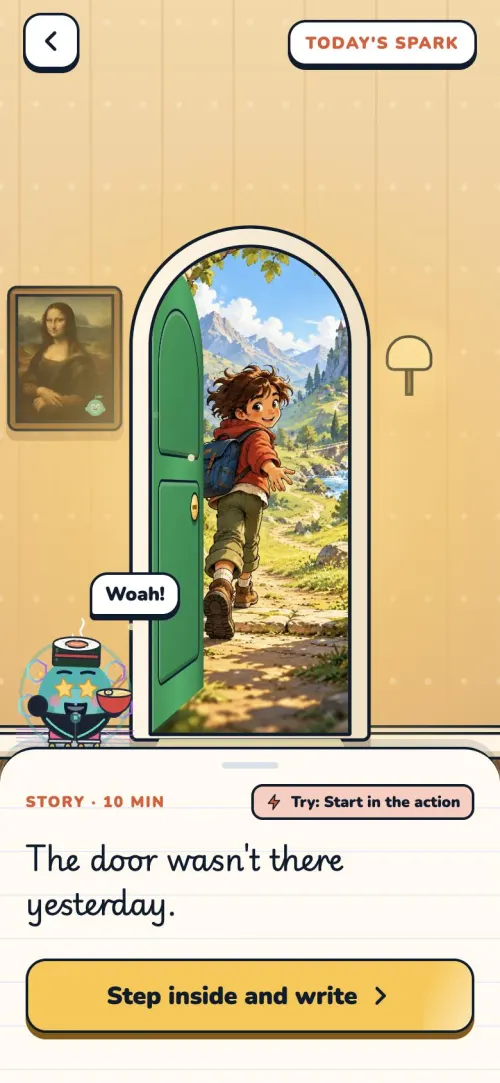
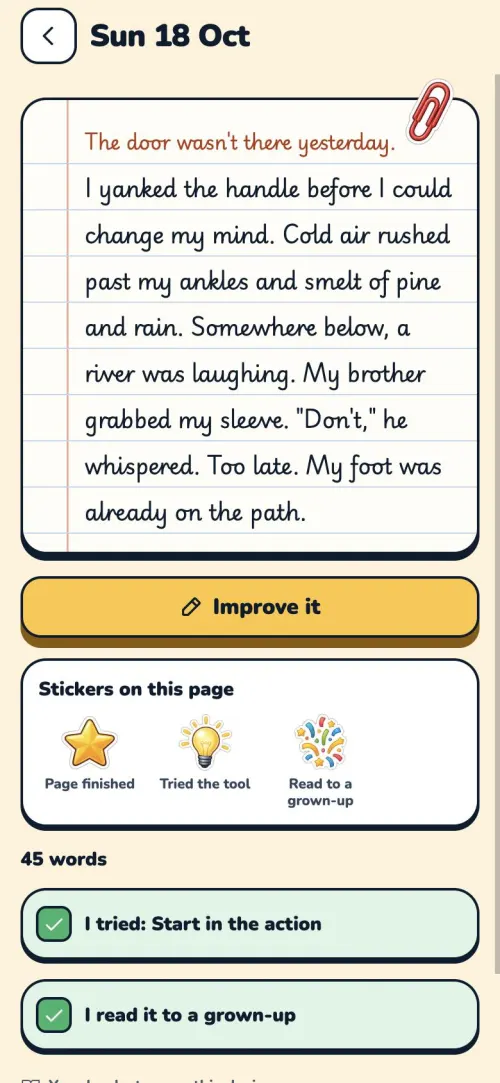
Each day there's a painted picture and a first line to spark an idea, one writing technique to try, and a Writing Book that fills up with their work.
Over time they learn the techniques teachers and 11+ markers look for, and they start to enjoy writing.
- Children write more, and better, when they start from a picture instead of a blank page.
- Teaching one technique at a time works better than a long checklist.
- About ten minutes of writing on most days builds stamina and confidence.
- Reading work aloud to a grown-up is the simplest editing habit there is.
- Pip's Writing Studio does all four, for ages 7 to 11, and your child's writing stays on their device.
What is creative writing for kids?
Creative writing for kids is writing that starts from the child's own ideas, such as stories, descriptions, diaries, letters and persuasive pieces, rather than answers to set questions.
Between 7 and 11 it builds vocabulary, sentence control and the confidence to share ideas.
It's assessed in Year 6 and in many 11+ exams, so it matters for school as well as for fun (here's which 11+ exams include creative writing).
Good creative writing at this age comes from clear sentences, a strong opening, a feeling the reader can picture and an ending that links back to the start.
Long words matter far less than most parents think.
Why do children find creative writing so hard?
Most children find it hard because they're asked to think of an idea, plan it, choose good words, spell and punctuate, all at the same time.
That's a lot to juggle at eight.
The usual sticking points are:
- The blank page. No idea means no first sentence, and the clock keeps ticking.
- Too many targets. A list of ten features to include leads to writing that ticks boxes and doesn't flow.
- No reason to write. A piece that's marked and forgotten gives a child nothing to be proud of.
- Not enough practice. Many children only write a full piece a few times a term.
Pip's Writing Studio is built to fix all four, and the next section shows how.
How does Pip's Writing Studio help your child write better?
It gives your child a starting point, one clear thing to practise and a reason to keep going.
Here's how each part helps.
- A picture prompt every day. A painted scene and a first line give your child an idea straight away. The picture does the first bit of thinking, so the words come faster.
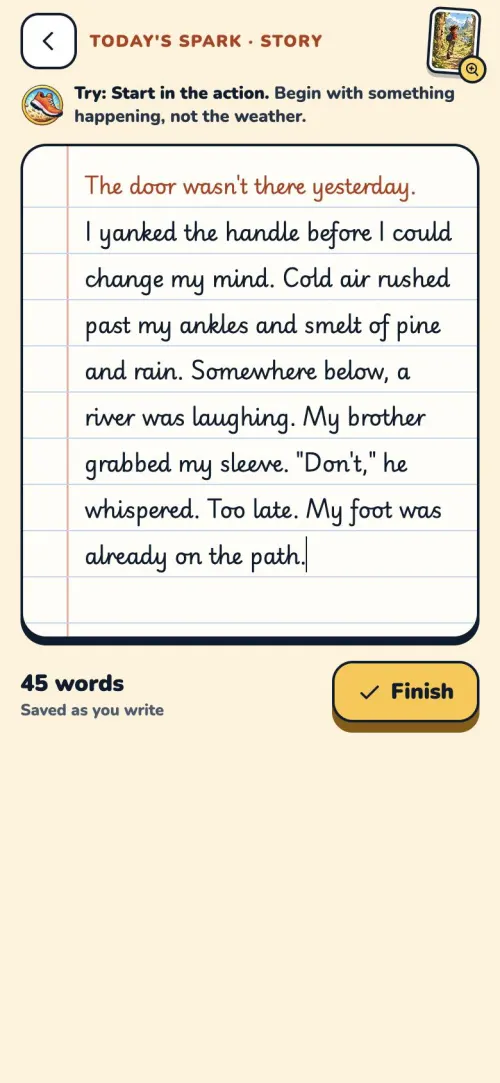
- One technique at a time. Each prompt suggests a single technique to try, such as "Start in the action" or "Show, don't tell". Your child focuses on doing one thing well.
- Lessons that show the change. Each lesson takes about five minutes. Your child sees a flat sentence turn into a strong one, spots the technique, then uses it in their own writing.
- Writing on most days. Each prompt is set for about ten minutes, and your child can keep going for as long as they like. Frankly, regular writing builds stamina faster than anything else, and it never has to turn into a battle.
- A Writing Book they're proud of. Every finished piece is saved with its date, so your child can see how far they've come and go back to improve a page.
- Six kinds of writing. Stories, descriptions, persuasion, letters, diaries and explanations, which is the range schools and exams ask for.
A picture prompt, not a blank page
Your child opens the day's picture and gets a first line and one technique to try.
They have an idea before they've written a word.
Try the Writing Studio today, free
Download Pip 11+ & KS2 Practice and give your child their first picture prompt tonight.


Which creative writing techniques will your child learn?
Your child learns 16 techniques, the same ones teachers and 11+ markers reward.
They include strong openings, show, don't tell, similes, dialogue, tension and paragraphs.
Each one comes with a before and after example, so your child can see exactly what changes.
It was a sunny day.
I woke up and had breakfast.
Then I went to the river.
I jumped.
My trainers skidded on the wet stone and the river roared underneath me.
Start in the action
Skip the weather and the breakfast.
Open with something happening and the reader is hooked from the first word.
 Start in the action
 Paint the scene
 Short, sharp
 Reaction
 Strong verbs
 Show, don't tell
 Zoom in
 Opening hook
 Tension and pace
 Dialogue
 Endings that land
 Paragraphs
 Day and night flip
 Similes
 Formal and informal
 Control
| Technique | What it means | Skill it builds |
|---|---|---|
| Start in the action | Begin with something happening, not the weather | Openings that grab the reader |
| Paint the scene | Use two senses: what can you hear and smell? | Sensory description |
| Short, sharp | A very short sentence when something big happens | Sentence variety for impact |
| Reaction | Show how the character feels straight after it happens | Character and emotion |
| Strong verbs | Swap "went" or "said" for a word that shows how | Precise vocabulary |
| Show, don't tell | Don't say "scared". Show what their hands and face do | Showing emotion |
| Zoom in | Pick one small moment and write more about it | Detail and pace |
| Opening hook | Make the first line a question the reader needs answered | Hooking the reader |
| Tension and pace | Shorter sentences as things get scarier | Suspense |
| Dialogue | One line of speech that moves the story on | Purposeful speech |
| Endings that land | End by linking back to how you started | Circular structure |
| Paragraphs | A new one when the time, place or person changes | Organising a piece |
| Day and night flip | Describe the same place at a different time | Contrast and mood |
| Similes | Compare one thing to something it looks like | Figurative language |
| Formal and informal | Write it the way you would to a head teacher | Writing for an audience |
| Control | Use words you can spell and mean. Check every full stop | Spelling and punctuation |
What are some fun creative writing prompts for kids?
The best prompts take a familiar place and add one strange detail.
Here are six picture prompts from the Writing Studio that you can try at home tonight, with a pencil and paper or in the app.

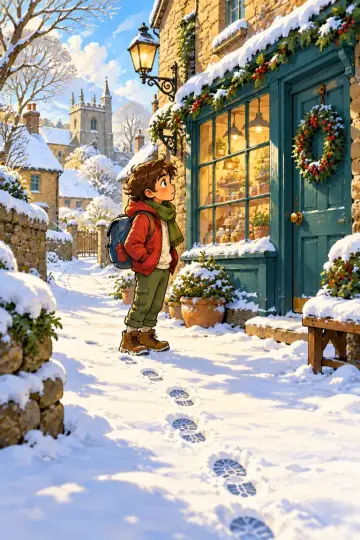
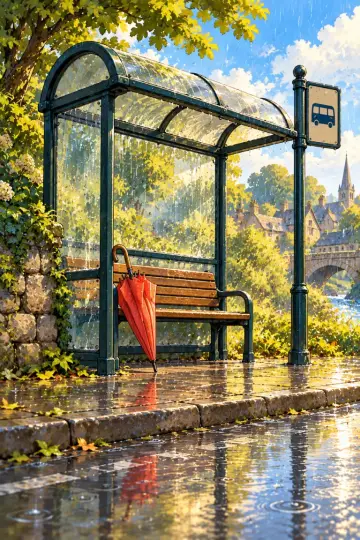

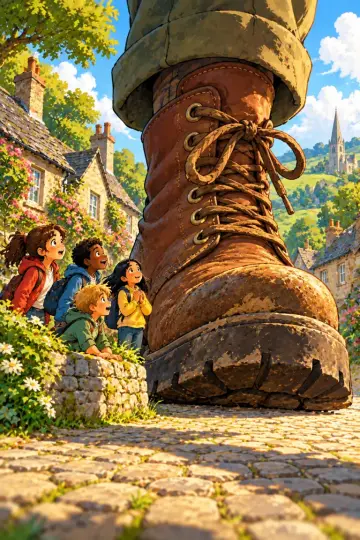
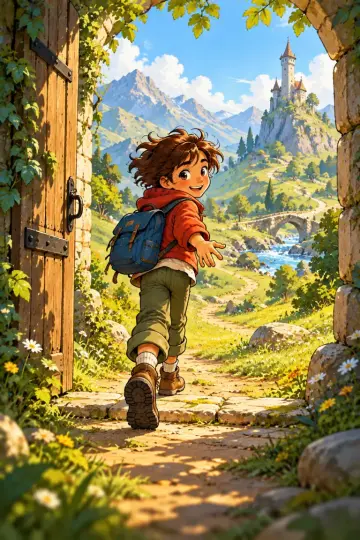
Before your child starts, ask three questions about the picture: who's there, what has just happened, and what might go wrong?
See all 100 creative writing prompts, sorted by type and age, with a printable PDF and a new prompt every day.
Those answers become the beginning, middle and end.
How do you teach creative writing to kids at home?
Start with a picture and one technique, keep it short, and read the result aloud together.
These creative writing tips for kids work with or without an app:
- Give them a picture, not a blank page. Ask "What's happening right now?" before any writing starts.
- Teach one technique at a time. Show a weak sentence and a strong one, then ask for one sentence that uses the technique.
- Plan in three boxes. Beginning, problem, ending. A two-minute plan saves a story that wanders.
- Keep it short and often. Ten focused minutes on most days beats one long Sunday session.
- Read it aloud. Children hear missing words and clumsy sentences far better than they see them.
- Praise one thing, fix one thing. Our guide to marking 11+ creative writing shows how.
- Mix the kinds of writing. A letter or diary entry stretches different skills from a story.
For paper practice, our free 11+ creative writing worksheets and FSCE writing prompts pair well with the Studio.
What should you look for in a creative writing app for kids?
Look for an app that teaches writing techniques as well as giving prompts.
In our view, the best tools for kids' creative writing do four things: give a strong starting point, teach one technique clearly, keep the child's work somewhere they're proud of, and keep that work private.
Many online creative writing programmes for kids depend on a tutor or a class timetable.
The Writing Studio fits round your week, and your child's writing never leaves their device.
Is the Writing Studio free?
Yes.
Your child gets three picture prompts, the first lesson and their Writing Book free, then a new free prompt every Monday.
Pip Pro adds a new prompt every day and all 16 lessons, alongside everything else in Pip.
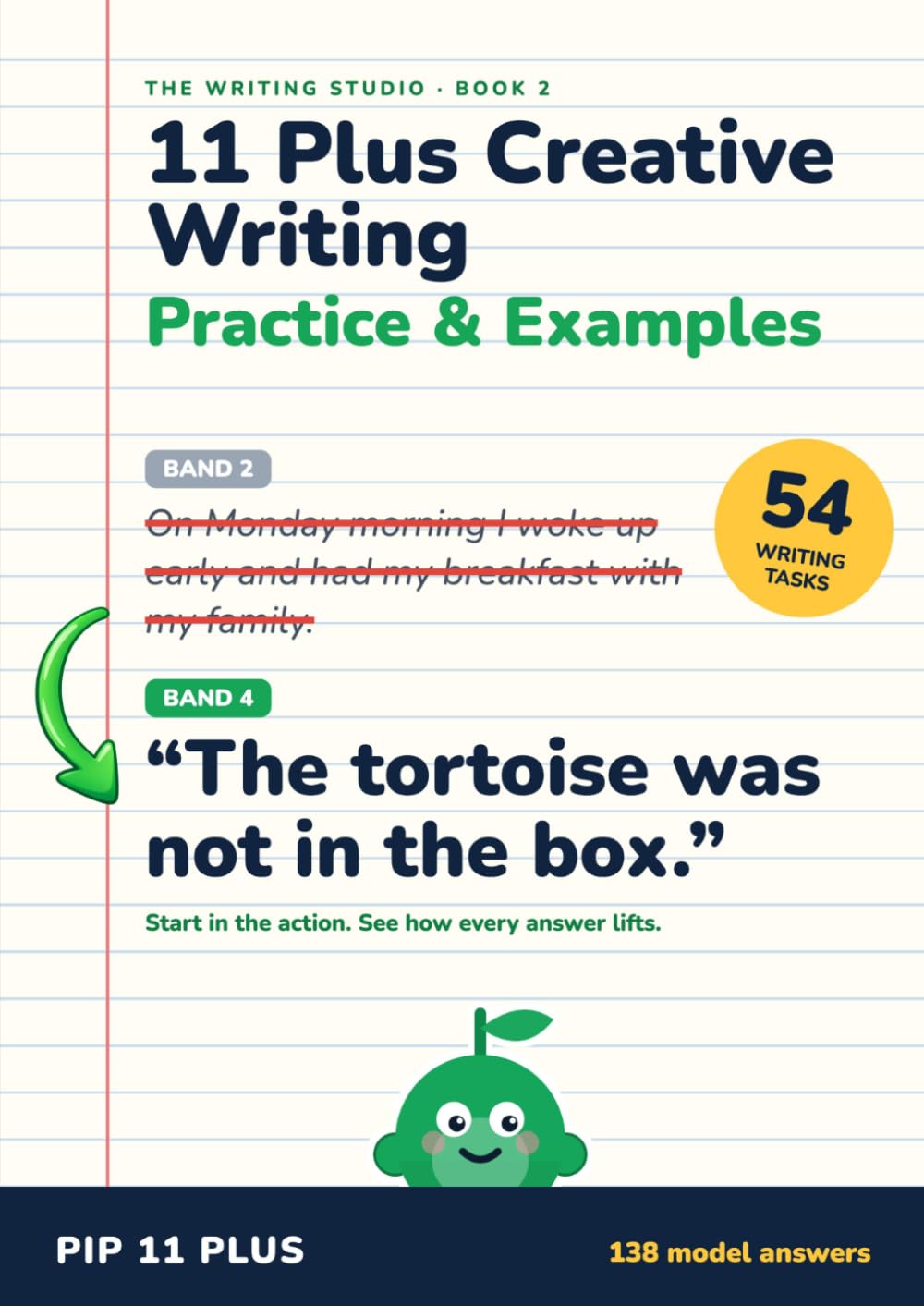
The same techniques come in two workbooks.
Book 1 teaches each one with worked examples and a self-marking scheme.
Book 2 adds practice prompts and full example answers.

Download Pip 11+ & KS2 Practice
Try the Writing Studio today for free, alongside maths, English and reasoning practice for ages 7 to 11.
Frequently asked questions
What age is the Writing Studio for?+
Ages 7 to 11, from Year 3 to Year 6. The prompts are open enough for a younger child to write a few lines and an older child to write a full page.
Does it help with 11+ creative writing?+
Yes. The 16 techniques are what markers reward: strong openings, showing feelings, varied sentences, paragraphs, dialogue and accurate punctuation. It suits any exam that sets a writing task, as well as Year 6 writing.
Does Pip mark my child's writing?+
No. Your child checks their own work, tries the suggested technique and reads the piece to a grown-up. If you want to mark it at home, our guide to marking 11+ creative writing gives you a simple scorecard.
Is my child's writing private?+
Yes. What your child writes stays on their device. It isn't uploaded or shared.
How long does it take each day?+
A picture prompt is set for about ten minutes and a lesson takes about five. Your child can always write more.
Is the Writing Studio free?+
Yes. Three picture prompts, the first lesson and the Writing Book are free, then a new free prompt opens every Monday. Pip Pro adds a prompt every day and all 16 lessons.

The Pip team builds Pip, the 11+ and KS2 practice app for children aged 7 to 11. We write guides that help parents support their child at home.